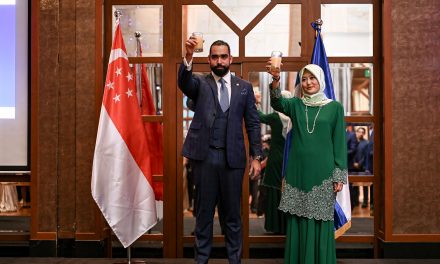
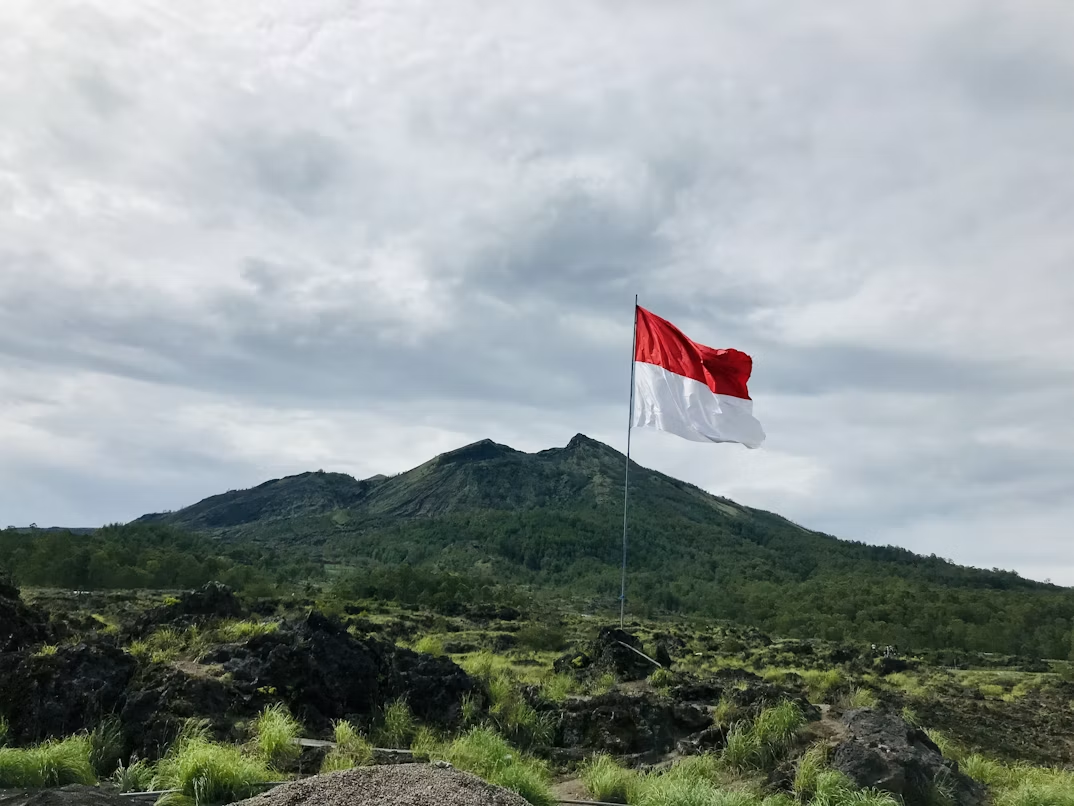
Red-and-white flags appear outside houses, along streets and in front of public buildings. Schools prepare for flag-raising ceremonies, offices hold their own commemorations, and communities begin organising the familiar competitions that have become part of the country’s Independence Day tradition.
On 17 August 2026, Indonesia celebrates 81 years of independence.
As someone who lives in Indonesia, I have always found the way Indonesians celebrate this day interesting. There is a formal side to it, with ceremonies and national symbols, but there is also something much more personal. Independence Day becomes part of everyday community life.
To understand why 17 August matters so much, it is worth going back to where it began.
The Origins of Independence
Indonesia proclaimed its independence on 17 August 1945, after centuries of colonial rule.
The events leading to the proclamation unfolded quickly following Japan’s surrender in August 1945. Young Indonesian activists wanted independence to be declared immediately, while two leading nationalist leaders, Soekarno and Mohammad Hatta, were more cautious about how the declaration should take place.
On 16 August 1945, the two nationalist leaders were taken to Rengasdengklok by young activists. They later returned to Jakarta, where the proclamation text was prepared at the residence of Japanese naval officer Admiral Tadashi Maeda. The final text was typed by Sayuti Melik and signed by Soekarno and Hatta on behalf of the Indonesian people.
The following morning, Soekarno read the Proclamation of Independence at his residence on Jalan Pegangsaan Timur 56 in Jakarta. The red-and-white flag was raised, followed by the singing of Indonesia Raya.
The proclamation did not mean that Indonesia’s independence was immediately gained. Fighting and diplomatic negotiations continued with the colonial administration of the Netherlands before the formal transfer of sovereignty in 1949.
That is why the story of Indonesian independence is not simply about one declaration. It is also about what came afterwards: defending the new republic and building a country from a vast and diverse archipelago.
Today, that diversity is one of the things that makes Indonesia distinctive.
Indonesia is home to hundreds of ethnic groups and languages, with traditions that vary considerably from one region to another. This is also part of what attracts visitors from around the world. People come to Indonesia for its natural landscapes, but many also come to experience its culture.
Observing Indonesian Independence
Personally, I am particularly drawn to the traditions that have survived from Indonesia’s older kingdoms. In several parts of the country, customs and ceremonies associated with historical kingdoms are still preserved. Living in a modern Indonesia while seeing these traditions continue is a reminder that the country’s history is not something confined to museums. In many places, it remains part of everyday life.
Perhaps nowhere is that sense of community more visible than during Independence Day.
The weeks before 17 August are usually filled with preparations. Flags are put up around neighbourhoods, streets are decorated and people begin getting ready for the celebrations. On the day itself, children attend ceremonies at school and employees take part in observances at their workplaces.
Then there are the competitions.
The traditional 17 Agustus competitions are probably one of the most recognisable parts of Independence Day for Indonesians. There are cracker-eating competitions, sack races and many other games organised by local communities. They are simple activities, but that is part of their charm. Children get excited, adults join in, and neighbours spend time together.
The night before 17 August can be meaningful too. In some communities, people gather for prayers and share a meal before the following day’s celebrations.
For me, these traditions are what make Indonesian Independence Day feel different. It is not only a national event organised through official ceremonies. It is something that people create together in their own neighbourhoods.
The Future of Indonesia
Celebrating independence also means looking honestly at the country today.
Indonesia has made considerable progress over the past 81 years, yet being an archipelagic country presents challenges of its own. Not every region develops at the same pace, and access to infrastructure and public services can still vary considerably between parts of the country.
This year’s Independence Day makes that contrast particularly visible. While many Indonesians are celebrating, communities in East Nusa Tenggara are still dealing with the aftermath of a deadly earthquake. Rescue and recovery efforts were continuing on 17 August, with dozens of lives lost in the disaster.
It is a reminder that national celebrations take place alongside the realities that people face every day.
For me, that does not make Independence Day less meaningful. If anything, it gives the day another dimension. Independence is not only about remembering how Indonesia became a sovereign nation. It is also about thinking about the country that Indonesians are still building.
After 81 years, Indonesia is certainly not without its challenges. But perhaps independence was never meant to be the end of the journey.
On 17 August, I see it in the flag outside a neighbour’s house. I see it in children competing in a neighbourhood game. I see it when people gather together the night before the celebration.
These may seem like small things, but they are part of how independence is kept alive.
From my perspective as someone living in Indonesia, that is what makes 17 August special. It is a day to remember the history that brought the country here, while also recognising that the story of Indonesia is still being written.