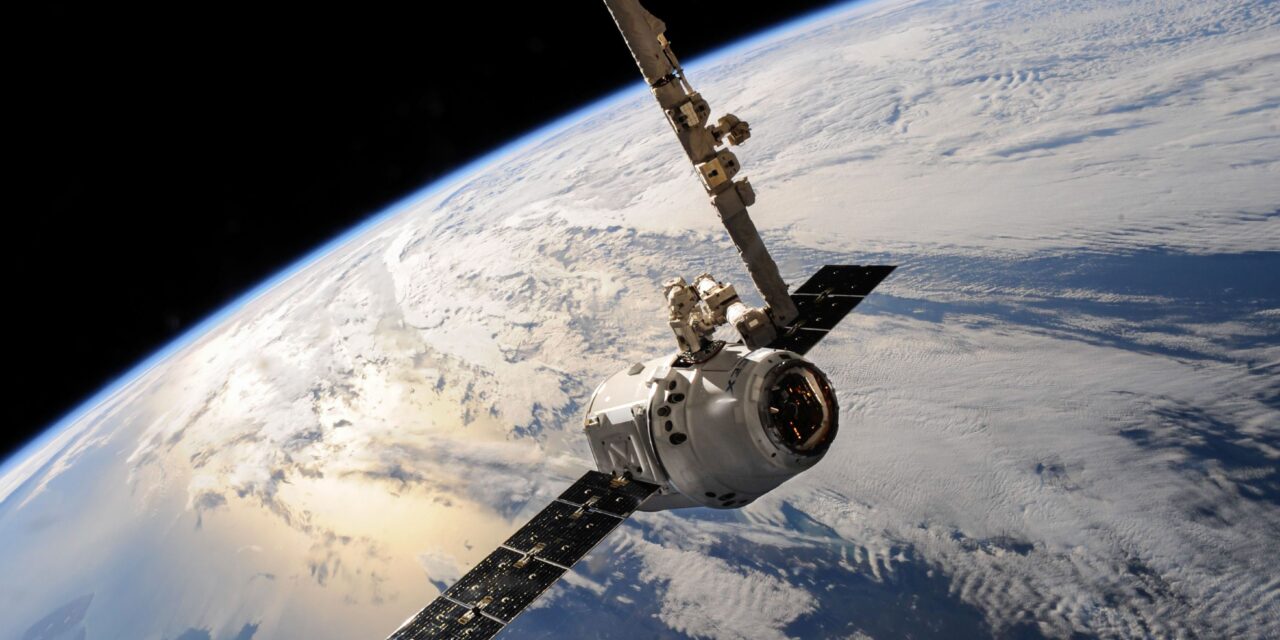
Outer space was once the realm of impressive science, and perhaps the even more impressive human imagination for science fiction. Today, new developments in the space industry say otherwise.
The region beyond Earth has quietly become a seed for economic activity that could grow into a major driver of growth for the next century, perhaps even more so than artificial intelligence.
This has also stirred debate over the diplomacy of outer space, and how multiple parties can settle disputes and structure future cooperation over regions with no human habitation.
On 31 August, Türkiye became the 71st country to sign the Artemis Accords, a US-led framework for peaceful exploration.
Just a few days earlier, Gen. Stephen Whiting, a commander in the United States Space Force, spoke about developing offensive anti-satellite weapons as a pressing military priority for the United States.
Hence, even for the nation with the most storied history of space exploration, it is still unclear what red lines should be drawn in space, and what space technology is worth sharing with the human family.
Unlike decades prior, diplomats and public policy officials will be forced to confront this sticky question. This applies even to smaller nations like Singapore, whose commercial ambition will surely come into contact with the emerging field of space diplomacy.
The Antarctic Blueprint
The most convenient analogy to outer space cooperation would be to turn to Earth’s very own version of an uninhabited continent already populated by a selective group of scientists: Antarctica.
When the Antarctic Treaty was signed in 1959, its twelve signatories, including the United States, agreed to the peaceful sharing of the continent for research purposes while strictly freezing all territorial claims.
The 1967 Outer Space Treaty was heavily modelled on the Antarctic Treaty, promoting space for the use and benefit of all humankind, including celestial bodies such as the Moon.
The Outer Space Treaty explicitly prohibits the placement of weapons of mass destruction in orbit.
A lot has changed for both Antarctica and outer space in the decades since their respective treaties.
The Antarctic Treaty merely suspended ownership claims over the continent, rather than resolving them. The treaty bans mining on the continent until 2048, when signatories may call for the ban to be reviewed. 2048 has since become a speculative date that has fed speculation about renewed pressure on the continent’s resources once it arrives.
Outer space is an entirely different question for diplomats to discuss.
Unlike Antarctica, countries have not neatly marked out precise coordinates for territorial claims, yet the sky above Earth’s atmosphere is already home to close to 18,000 active satellites, most of them operated by the United States.
Furthermore, national laws can contradict the Outer Space Treaty. Some nations, including smaller states like Luxembourg, recognise the right of private entities to extract resources from space.
For now, differing visions of using space have not created major conflict.
It is, however, foreseeable that disputes could arise. If two nations, or private entities bound to separate national laws, were to compete for the same resources, there would be a problem on everyone’s hands.
Polarised Visions of Space
The immediate threat to cohesive space governance today comes from the problem that countries can choose to follow more than one framework governing space.
The Artemis Accords now count 71 signatories, setting out non-binding principles over the use and sharing of space resources. These include a recommitment to peaceful purposes and the development of space built on international law.
The International Lunar Research Station (ILRS), led by China and Russia, is slowly emerging as a counter-proposal to the Artemis Accords. The Chinese government has reported that 17 countries and international organisations, alongside more than 50 research institutions, have joined the partnership.
ILRS membership is drawn substantially from the Global South. This includes nations like Pakistan, Nicaragua and Senegal.
Unlike the Artemis Accords, which act as a set of guiding principles, ILRS is focused on a very specific goal: building a lunar base for scientific research.
Crucially, both Artemis and ILRS are built on the same guiding principle of international partnership in approaching space that the 1967 treaty first established.
It can be read with a degree of optimism that neither coalition has shown immediate interest in accelerating the development of space warfare capabilities. The stated focus, for now, remains scientific research and exploration.
Ideally, neither Artemis nor ILRS would be the main governing body for outer space. That duty still falls to the United Nations Committee on the Peaceful Uses of Outer Space (COPUOS), which operates by consensus.
The threat lies in COPUOS struggling to keep up with growing concern over space debris and commercial activity, including lunar operations.
As disputes occur, the challenge of finding consensus will grow, and nations might soon abandon consensus in favour of a bloc that can govern space more effectively.
The First Star War
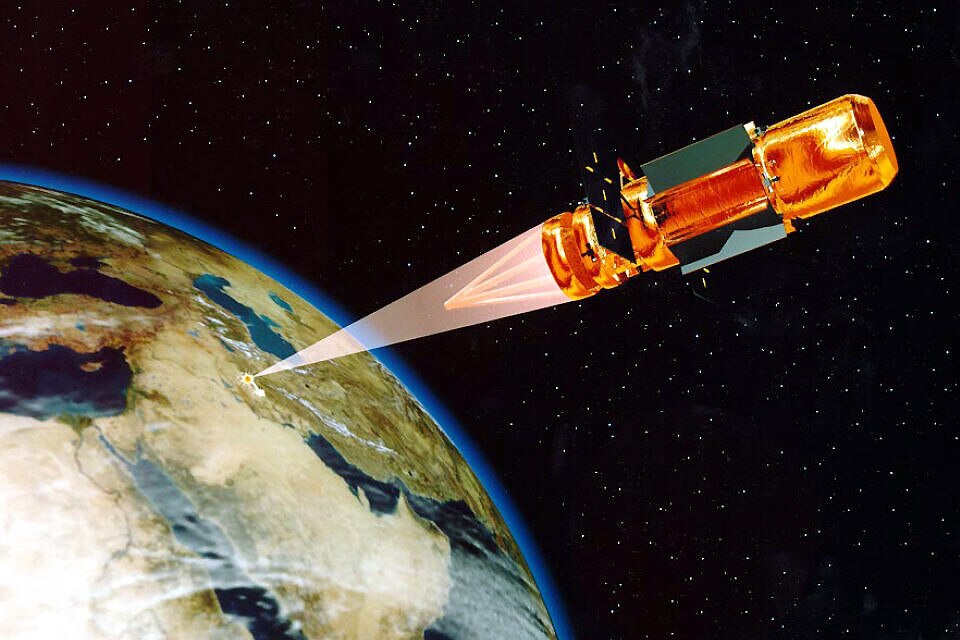
With growing attention on space as an economic driver, the wealthiest militaries have begun to speed up the development of offensive and defensive capabilities in orbit.
In August, Gen. Whiting of the US Space Force made frank comments about the importance of gaining offensive anti-satellite weapons for the nation’s arsenal.
The same month, Gen. B. Chance Saltzman, head of the US Space Force, gave the Wall Street Journal a detailed account of how the service is preparing to fight wars that could extend into orbit.
The growing acceptance of arms in space is a sign that public support for space militarisation is slowly emerging. The threat of a costly arms race now looms over the world’s foremost military superpowers.
Like most conflicts, small states caught in the middle would face severe consequences from an arms race. Satellites are not solely used by one nation; they facilitate a vast array of activities considered ubiquitous to the global environment, such as weather forecasting and logistics.
Classifying satellites as legitimate military targets risks exposing unwilling parties to conflict, with especially unforeseeable and dire consequences should even a few satellites be destroyed.
States with the largest militaries and resources prioritise the formation of a professional space force as a service branch. Other nations who lack these two advantages are focused on reducing their exposure to a potential space conflict.
A Characteristically Singaporean Approach to Space
Singapore’s response has been, like its approach to AI and other emerging technologies, specific, proactive and built on multilateral partnership.
On 1 April 2026, the National Space Agency of Singapore (NSAS) was established under the Ministry of Trade and Industry, absorbing and expanding the Office for Space Technology and Industry.
The agency is oriented towards commercial applications and satellite communications rather than launch vehicles or human spaceflight.
Given Singapore’s small land area, as well as the comparative advantage of the country’s scientific research spending in the region, the NSAS has set out a reasonable scope of focus it can pour its full attention into.
With the global space economy projected to triple to US$1.8 trillion by 2035, satellite services are the segment where a small state can compete with larger ones, so long as it has strong engineering and financial support.
Singapore has also taken the significant step of joining the Artemis Accords as early as 2022. At the same time, Singapore has already signed letters of intent in 2026 with the European Space Agency, Spainish Space Agency and the Maldives Space Research Organisation.
The island-state has been prudent in forming as many early partnerships as possible, leaving the door open for more opportunities as the industry continues to blast off.
An Inevitable Future
Like the Antarctic Treaty, any current agreement on space exploration, commercialisation and warfare will most likely be challenged in the coming decades. It is difficult to predict what consensus would emerge for a field as young as outer space diplomacy.
The very notion of space diplomacy reads as a science-fiction plot device written for books just a generation ago.
No reasonable public servant can dismiss concerns over space exposure and sovereignty anymore.
At the same time, the most explosive conflicts in the world today should give diplomats a greater incentive to ensure the earliest attempts at diplomacy beyond Earth are coherent and thoughtful, written by legal experts with the moral courage to de-escalate sensitive disputes.