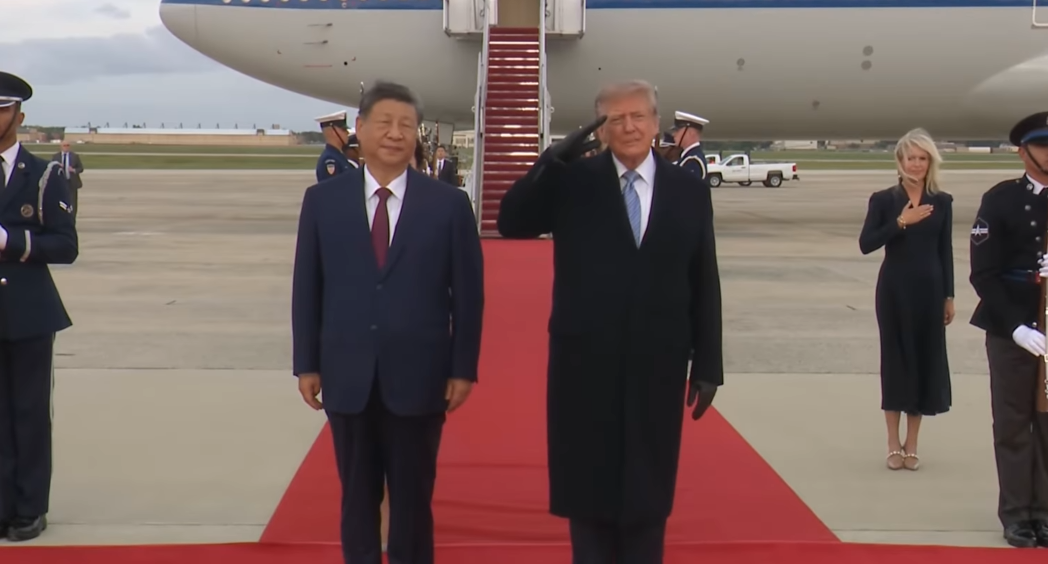
When US President Donald Trump welcomed Chinese President Xi Jinping to Washington this week, much of the attention surrounding the visit focused on what the two leaders might achieve.
After three days of meetings and diplomatic engagements, the outcome appears more measured.
The summit produced a short extension of the US-China trade truce and kept several important issues on the table, while leaving many questions for further negotiations.
Trade produced the clearest result. The United States and China agreed to extend their existing trade truce by two months, giving both sides more time to continue negotiations. The arrangement keeps tariffs largely stable for now, while discussions over Chinese purchases, rare-earth supplies and technology restrictions continue.
US Treasury Secretary Scott Bessent said the extension would give Washington and Beijing more time to see what could be achieved on the economic front.
The agreement is not a final settlement, but it provides some continuity to the relationship.
Rather than returning immediately to higher trade tensions, both governments have another period in which to work through their remaining differences. In that sense, the trade outcome reflects one of the broader purposes of the summit: keeping negotiations moving.
Artificial intelligence also became part of that conversation. President Xi said that the United States and China have both the capability and responsibility to develop and manage AI while ensuring that it remains under human control. The discussion reflects how quickly AI has become part of the wider relationship between Washington and Beijing.
However, the summit did not produce a major new bilateral agreement on AI, suggesting that the subject remains an area where further dialogue will be needed in the future.
Diplomacy over Taiwan was also raised during the meetings. President Xi urged Washington to handle the Taiwan question with prudence, according to China’s official readout.
There was no indication following the summit that the Trump administration had changed its longstanding formulation on the issue.
The exchange is significant, but it did not become a new agreement between Washington and Beijing. Instead, both sides were able to put their positions on the table while continuing their broader engagement.
The summit therefore demonstrated another function of diplomacy: difficult issues can remain part of the conversation without necessarily defining the entire relationship. This has been the source of praise in previous Trump-Xi Summits, as with this latest meeting.
The atmosphere surrounding the visit reinforced that emphasis on engagement with much pomp and fanfare.
President Trump personally welcomed President Xi at Joint Base Andrews, followed by a formal White House ceremony and state dinner. The programme placed considerable emphasis on the relationship between the two leaders and the long history of contact between the United States and China.
These gestures do not settle policy differences, but they form part of the wider diplomatic process. A personal welcome and continued leader-level contact can help maintain a relationship when negotiations are still ongoing. They also function as a show of respect in a diplomatic period that is increasingly more confrontational.
The summit ultimately leaves the relationship between both superpowers in a familiar but important position. The trade truce has been extended, AI has become an increasingly visible part of the bilateral conversation, and Taiwan remains an issue to be managed rather than resolved.
None of these developments settles the broader US-China relationship, but they show that both governments continue to leave room for engagement.