Artificial Intelligence (AI) has been a contentious issue for the past few years, gradually entering the working and personal lives of billions.
Diplomatic Network (Asia) hosted on Tuesday, 16th September, a high-level discussion on the challenges and roles of AI in the world today.
The event took place at the Pan Pacific Singapore on Raffles Boulevard and was structured into three panels, each tackling different but all-too-pressing questions.
Academics, business leaders and diplomats representing ASEAN and BRICS+ nations were invited to discuss and share their observations and opinions on the future of AI.
Discussions remained cordial, but rather than blind optimism or unhelpful pessimism, panellists under Chatham House Rules were able to express an honest range of opinions, with all parties walking away from the event carrying new perspectives.
Panel 1: Recent AI Trends, Challenges and Opportunities
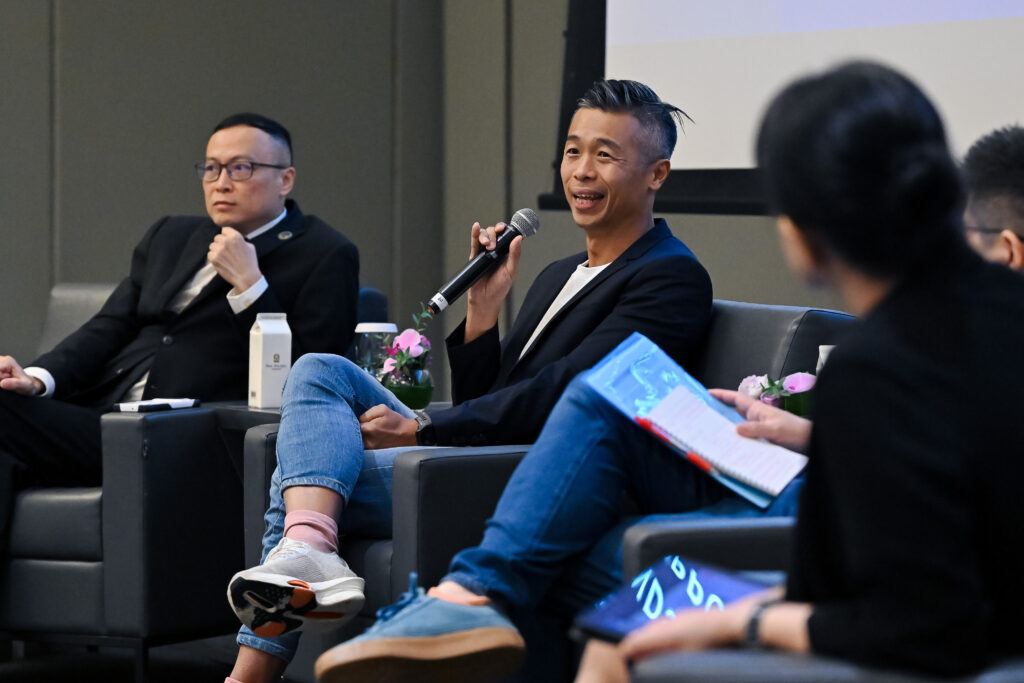
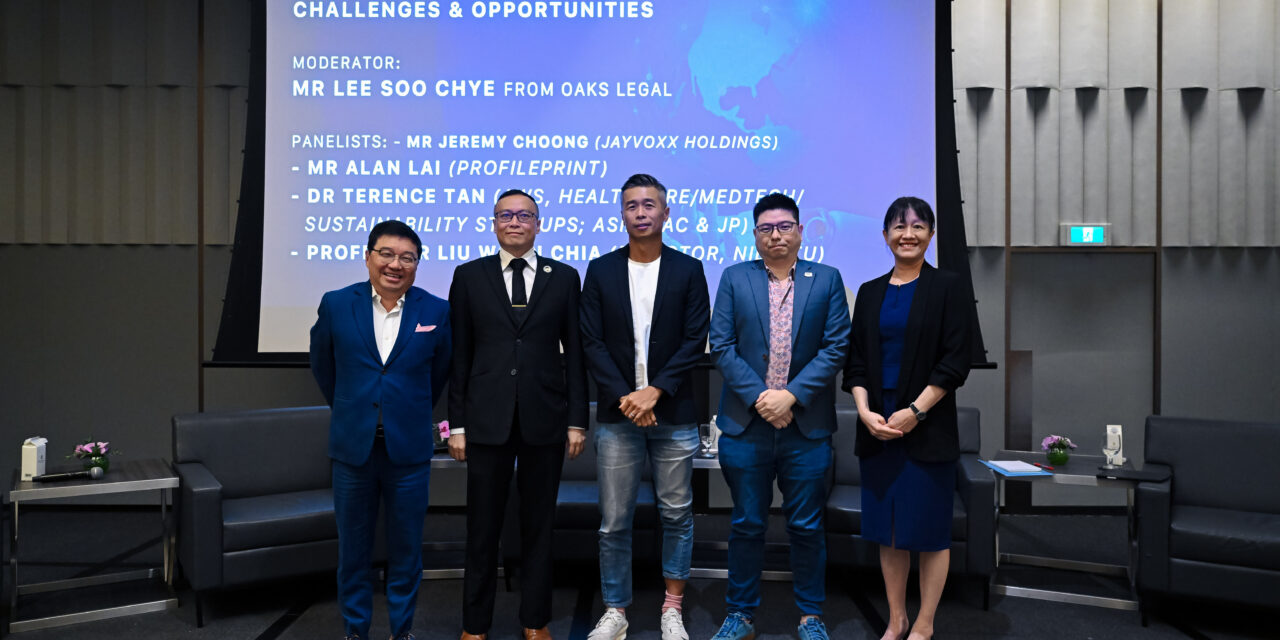
The first roundtable of the day was focused on discussing recent trends in the volatile and ever-evolving world of AI.
The panel included Jeremy Choong, Founder and Chief Science and Technology Officer of Jayvoxx Technology, Alan Lai, Founder and CEO of ProfilePrint, Dr Terence Tan, Head of Healthcare and Life Sciences at Amazon Web Services, and Professor Liu Woon Chia, Director of the National Institute of Education at Nanyang Technological University.
Additionally, Lee Soo Chye, Managing Director of Oaks Legal LLC, served as the moderator for this panel.
A key figure that emerged from this discussion was that AI will continue to grow exponentially, increasing its computing power by 10 times per annum.
Additionally, computational thinking will eventually shift to the cloud. This would invert current workflows into a “Service-As-A-Software” process. The future will likely see human-level services performed by professionals such as lawyers, doctors and accountants, while computing and problem-solving will be conducted by AI in the cloud.
However, such a fundamental transformation of our understanding of work means skilled professional services are at risk of redundancy in the coming decades.
The panel predicted that as AI advances towards real-world use cases and solutions, more people will develop stronger AI literacy. Individuals who cannot use AI tools as efficiently will, in turn, risk falling behind in a rapidly competitive environment.
One frustration expressed during the discussions was the prevalence of improper AI usage. For example, using chatbots to obtain quick answers risks removing the ability for their users to critically think through problems, impairing their ability for lifelong learning.
Education must therefore evolve to become more holistic, so that learners of all ages can incorporate a broad skill set to retain their thinking abilities in the age of AI.
Another problem regarding AI is the rising energy costs, with data centres expected to consume as much energy as an entire city.
While AI developers continue to produce more environmentally friendly solutions, a higher degree of social cohesion and resilience must be developed so that societies can prepare for change.
Panel 2: Regional and Global Governance and Perspectives on AI
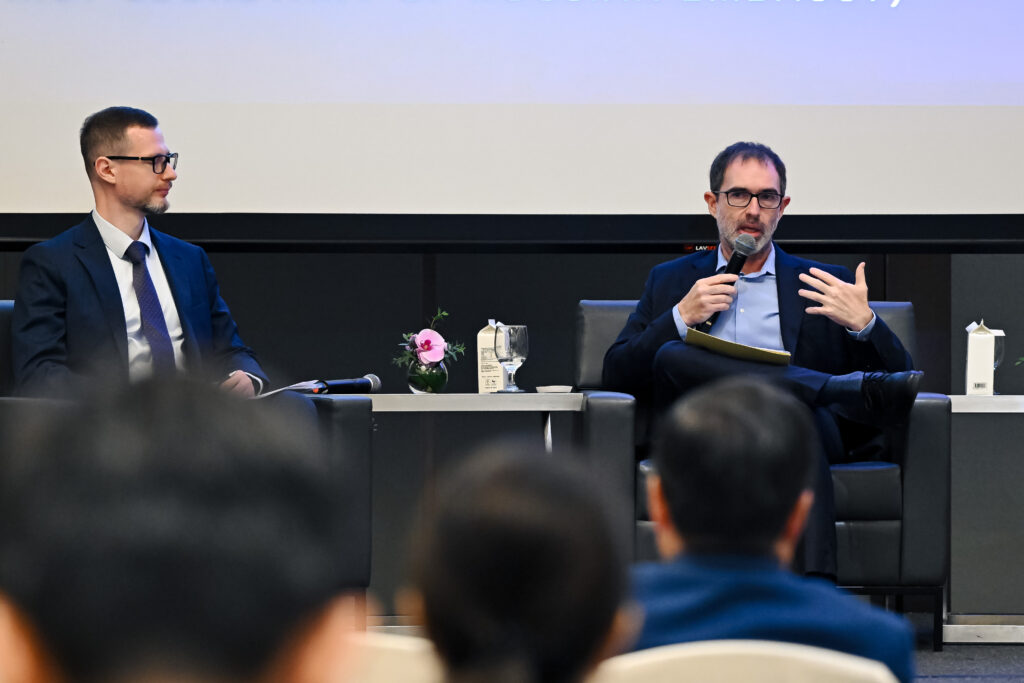
The second roundtable of the event focused on the differences between regional and global governance of AI.
His Excellency Luciano Mazza, Brazilian Ambassador to Singapore, and Honourable Mr Maksim Salnikov, First Secretary of the Russian Embassy, provided answers to complex questions during this panel.
The panel was moderated by Angela Torres-Andresen, Founder and Director of the Latin American Chamber of Commerce, Singapore.
The opinions expressed by the panellists were shaped by the challenges and successes of their respective countries. The point of similarity was that the adoption of technology must be flexible enough to address relevant scenarios.
For example, AI use in sustainable energy and agriculture, as well as financial services, has seen promising success since its incorporation into these sectors.
The conversation also noted two important considerations for developing nations. Firstly, a focus must be directed towards developing sustainable AI use at the national level to reduce existing inequalities.
Secondly, equitable AI development between countries will help strengthen local AI digital ecosystems. In a multi-polar world with increasing uncertainty, a strong national AI
Panel 3: Potential for South-South Co-operation on AI
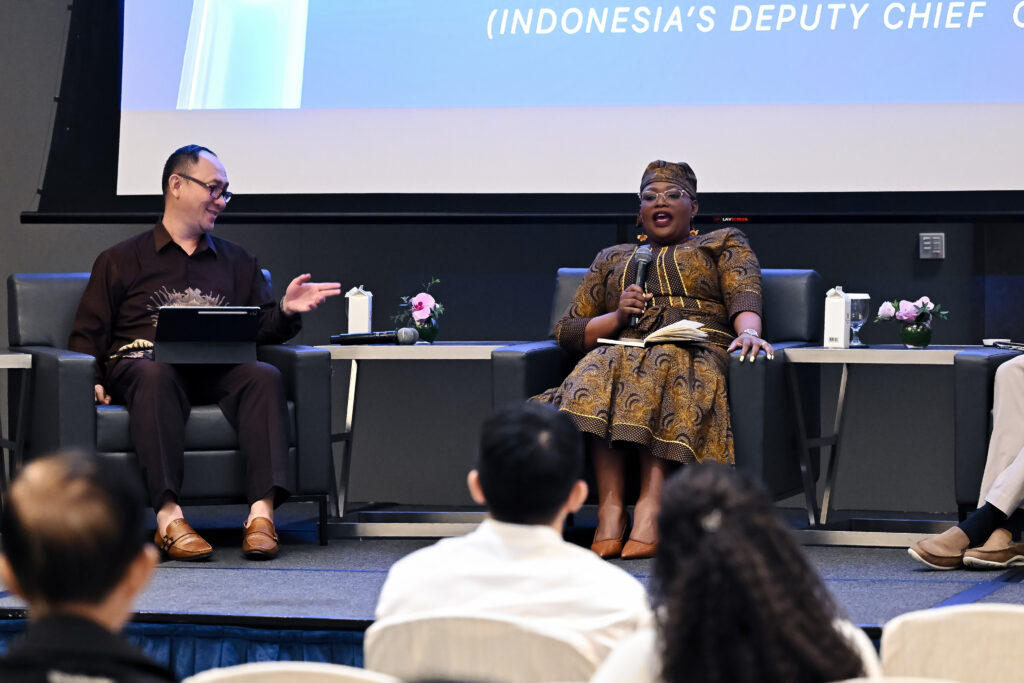
The final roundtable of the day explored the potential for AI to promote further South-South cooperation.
HE Charlotte Lobe, High Commissioner of the Embassy of South Africa, and Honourable Mr Thomas Ardian Siregar, Deputy Chief of Mission for the Embassy of the Republic of Indonesia, were invited to share their thoughts.
Steven Yates, a Representative of the South African Chamber of Commerce, moderated this panel.
An important discussion arose regarding labour adaptation and empowerment in the digital age. By harnessing AI as a key emerging technology, societies worldwide will be able to better utilise their workforce.
However, concern was raised over the current gaps between academic understandings of AI’s potential and its current usage in both industrial and commercial operations.
Therefore, it would be prudent for national AI strategies to foster closer collaboration between educational institutions and businesses in order to bridge the gap between theoretical academia and practical innovation.
Additionally, global cooperation in AI research must be proactively enhanced as the panel raised concerns over the possibility of a serious digital divide between separate communities on the same continent.
For South-South states to effectively cooperate in AI research, it was suggested that national AI strategies must be developed with a focus on key values of inclusivity and accountability.
Doing so would set an ethical standard for sustainable AI research and its potential economic advantages. Ultimately, a future where AI can help create a more inclusive global economy remains a possibility.
The Post-AGI world
A question raised during the event concerned what skill sets will remain relevant in a post-AGI (Artificial General Intelligence) world.
Some panellists suggested that basic roles and family units can never be replaced. Some panellists, on the contrary, believe that anything and anyone can be replaced by AI.
While it remains unclear when AGI will be developed, important discussions are already underway about what our world will evolve into and how societies can prepare for this.
DNA looks forward to facilitating more fruitful discussions in the coming years.