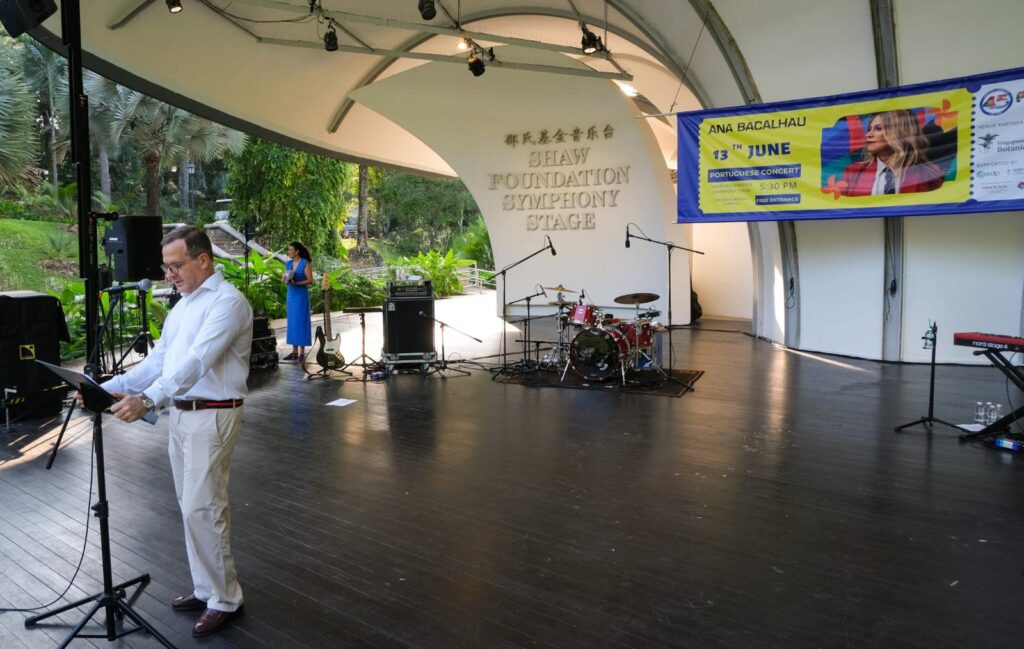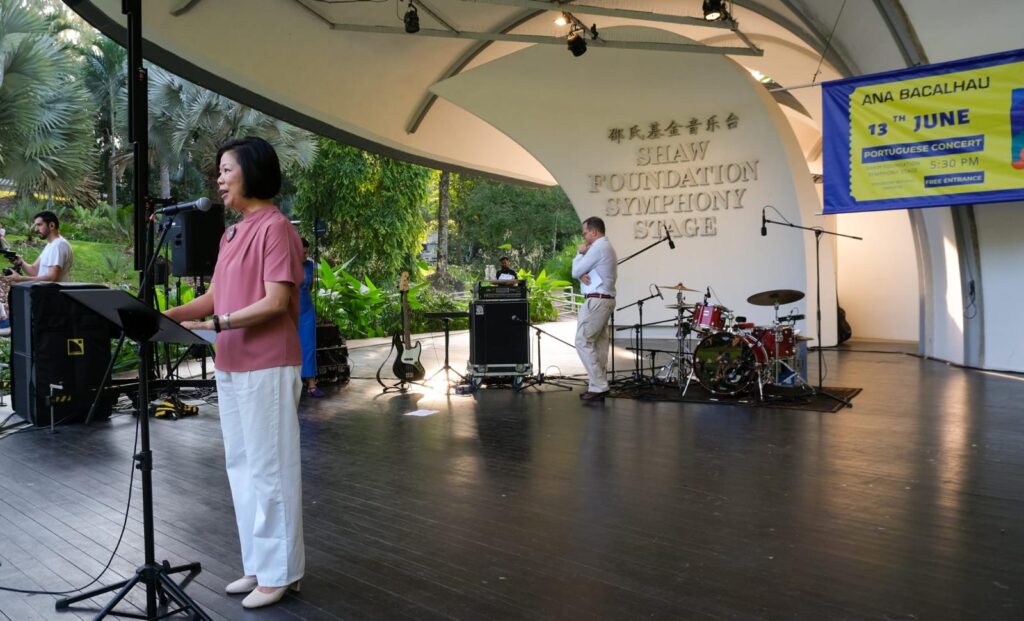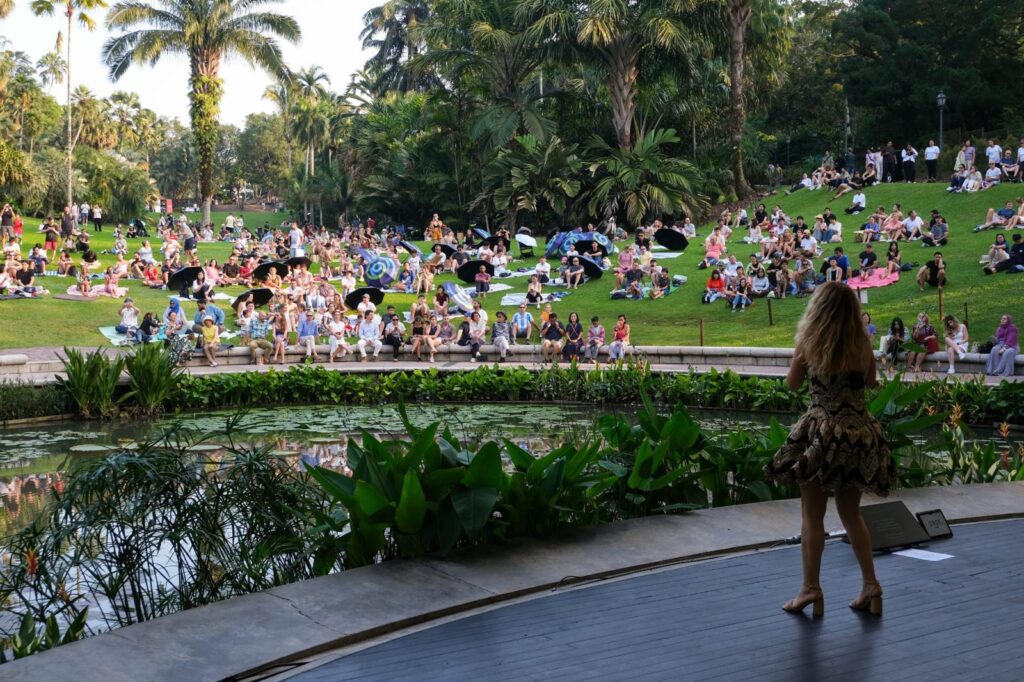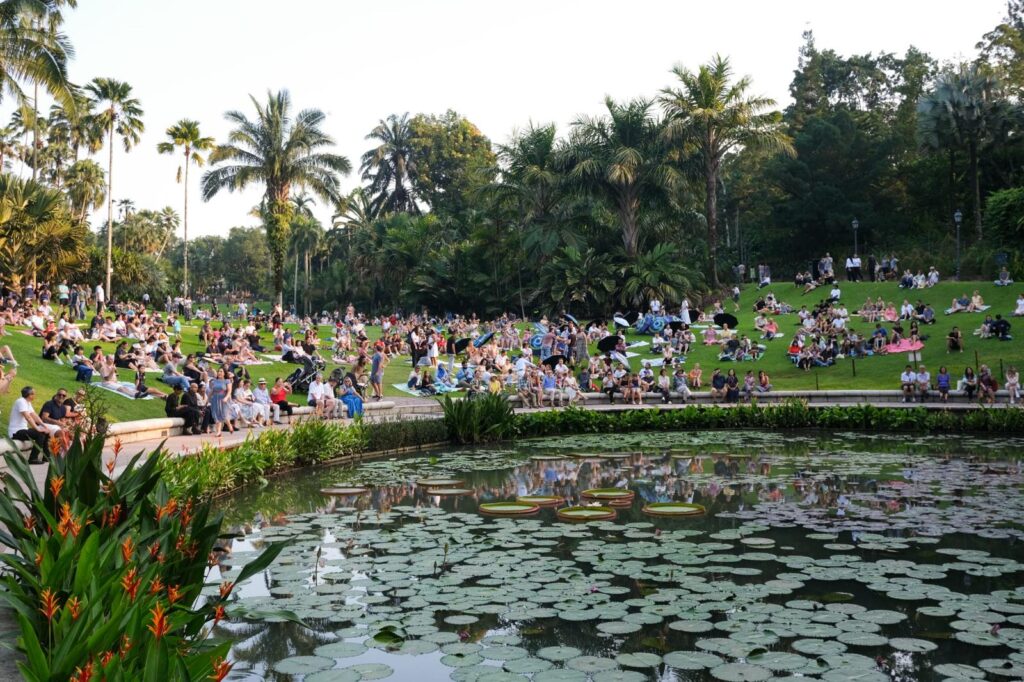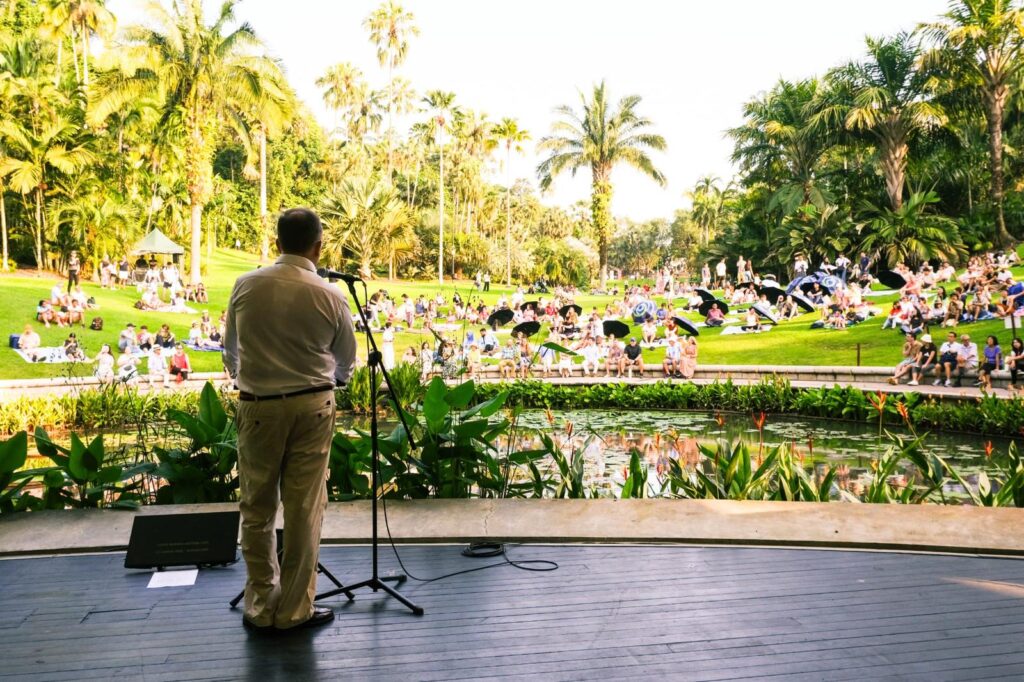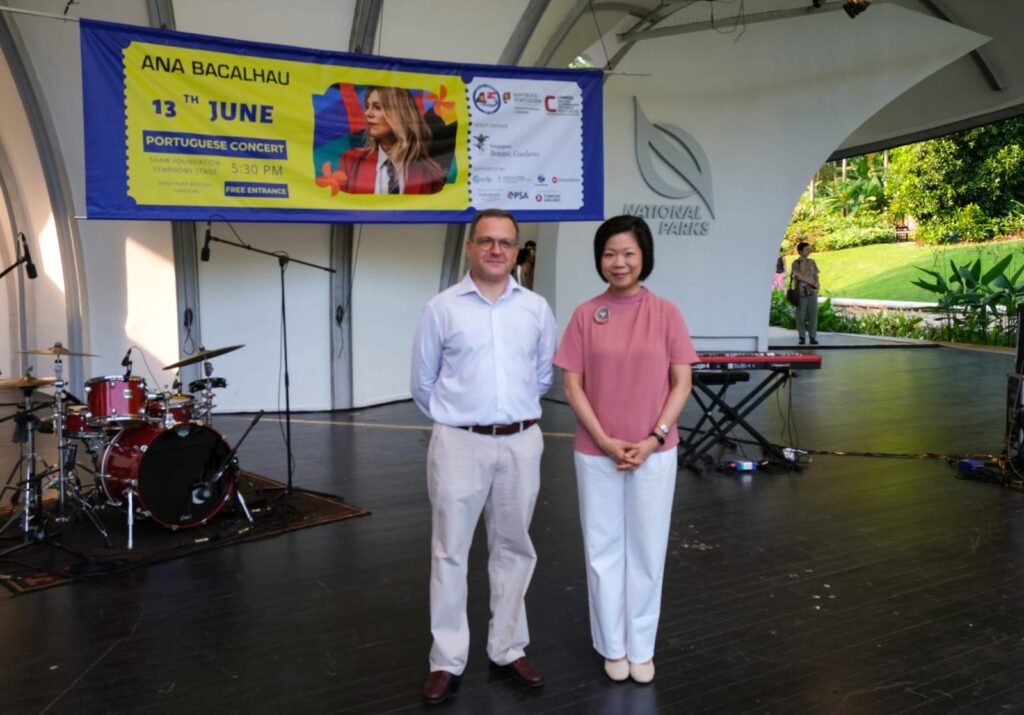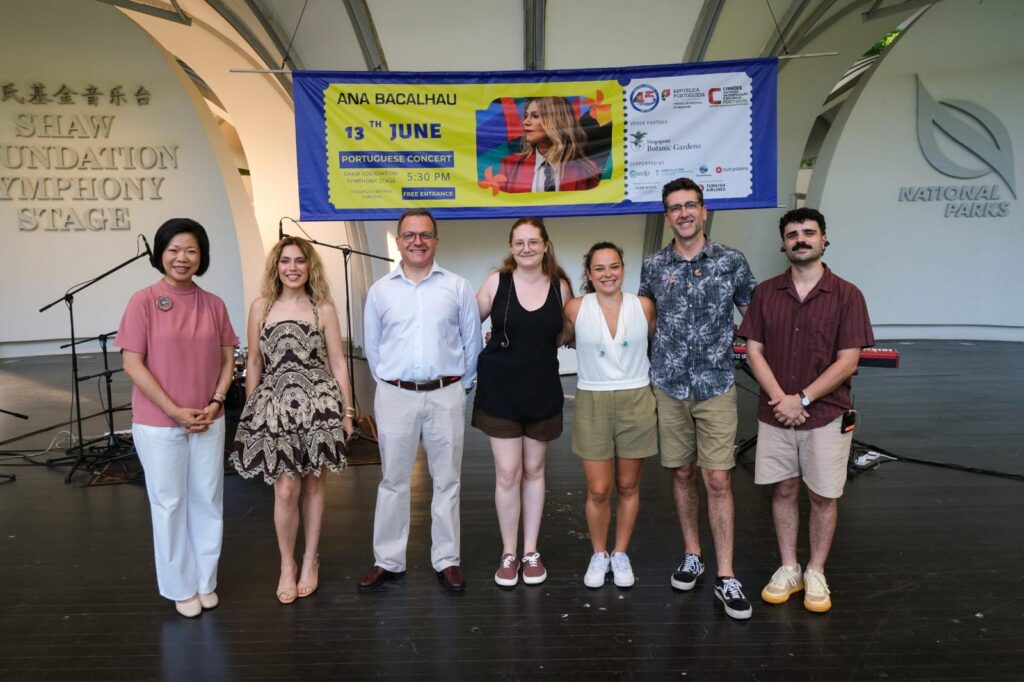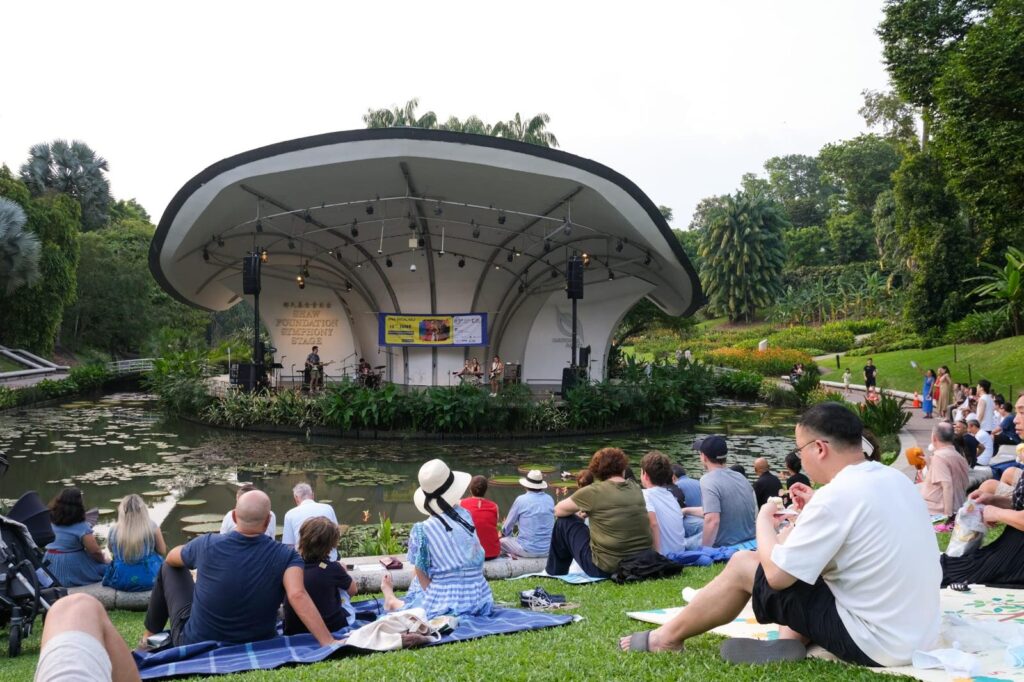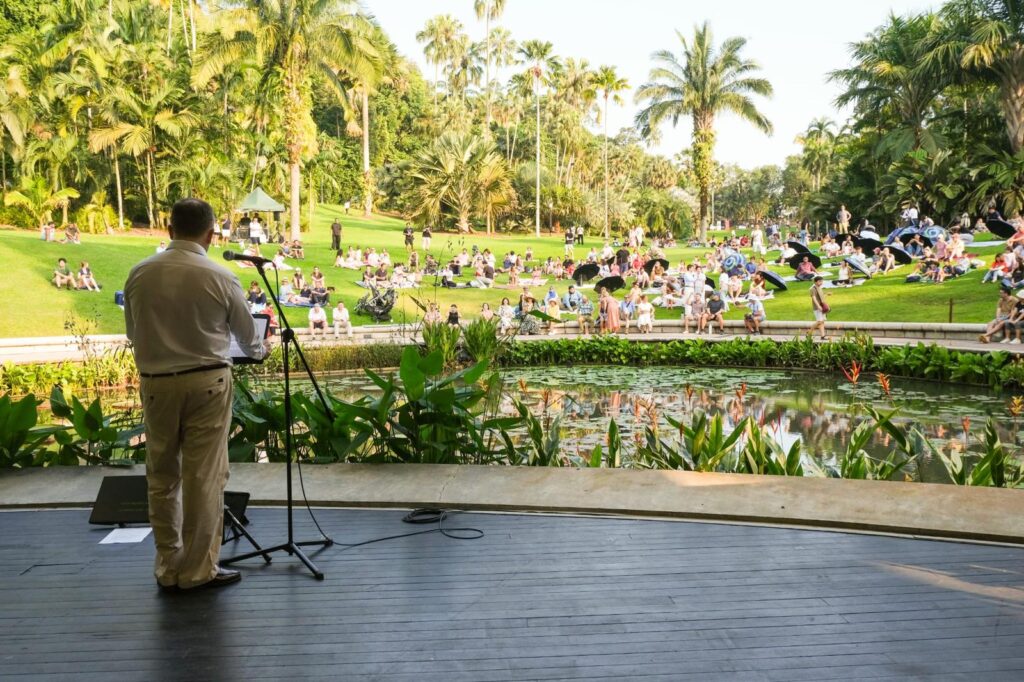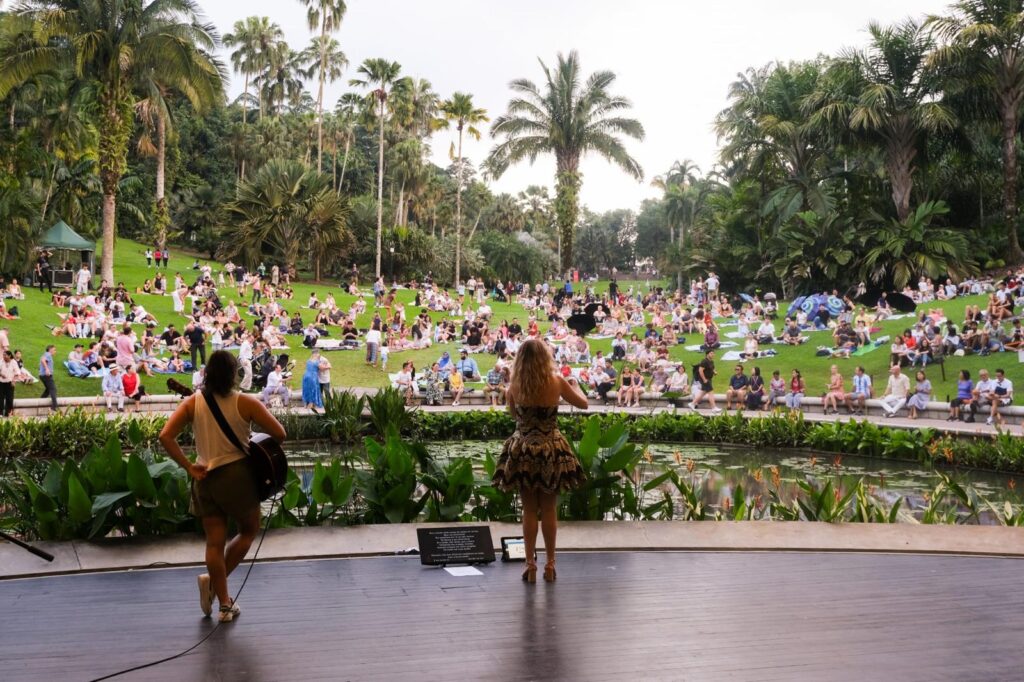
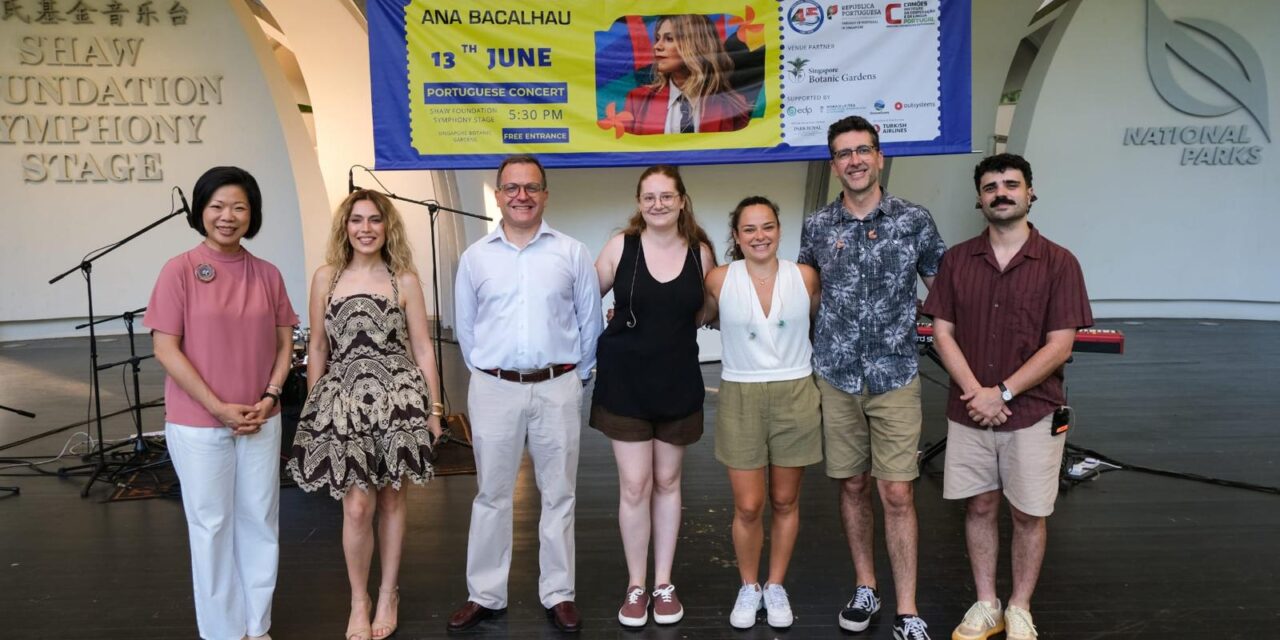
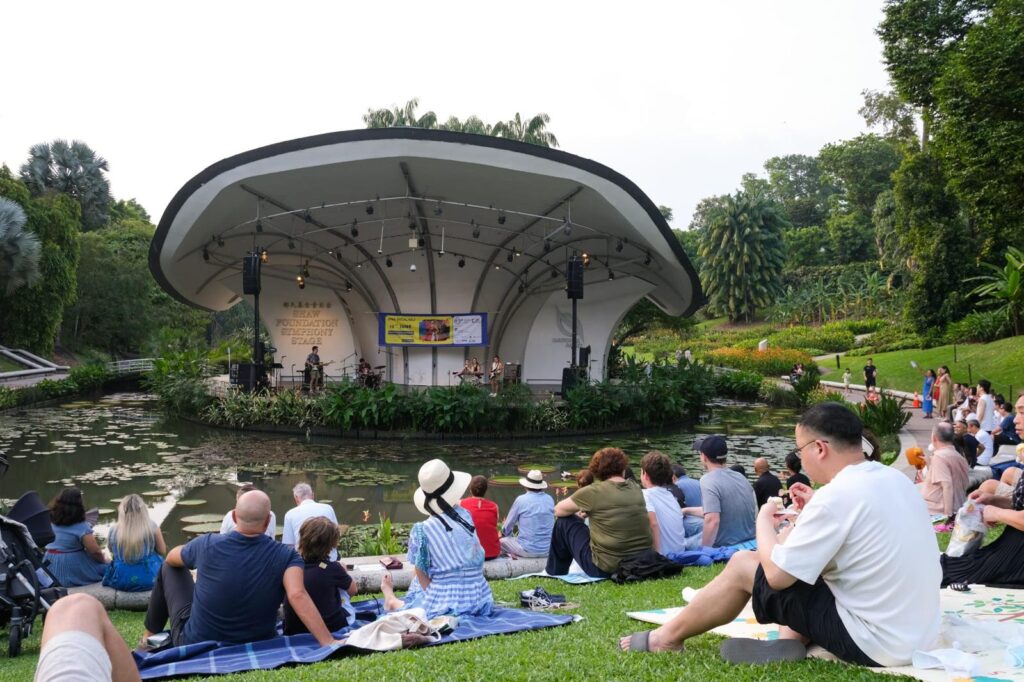
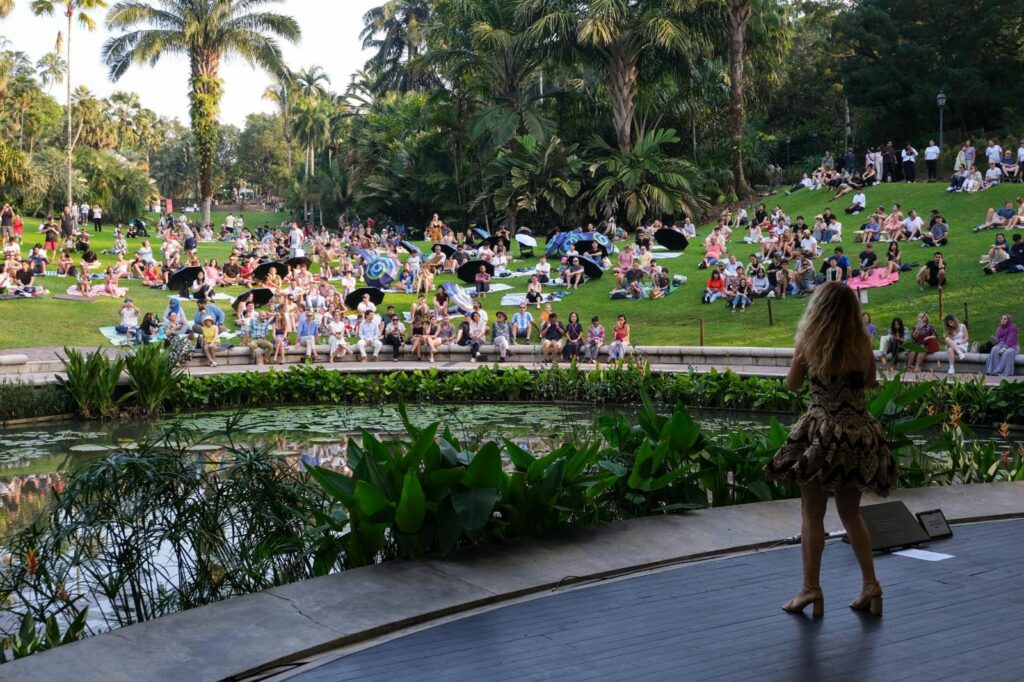
Blessed with clear, gentle sunshine from the sky above, Ms Ana Bacalhau took to the Shaw Foundation Symphony Stage at the Singapore Botanic Gardens for a special concert on Saturday, 13 June 2026.
The concert was organised by the Embassy of Portugal to commemorate 45 years of bilateral relations between Portugal and Singapore.
By inviting Ms Bacalhau, one of Portugal’s most prolific musicians, the Embassy of Portugal brought a piece of its homeland to share with the diplomatic community in Singapore. Well over one hundred guests, including prominent heads of mission, attended the hour-long concert.
Portuguese Heritage in Singapore
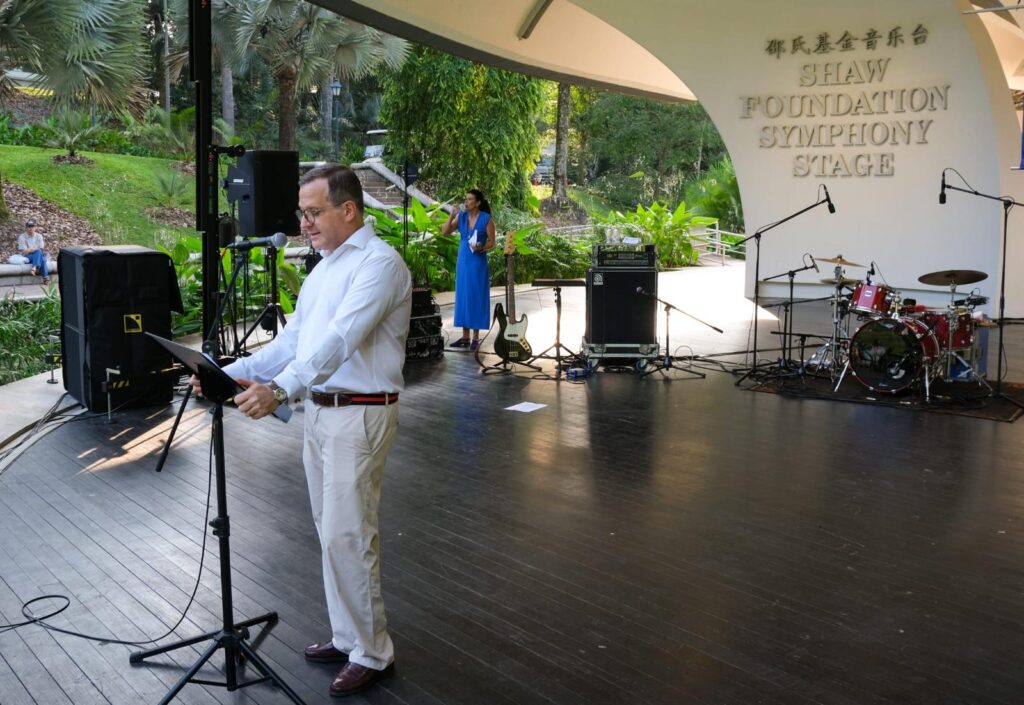
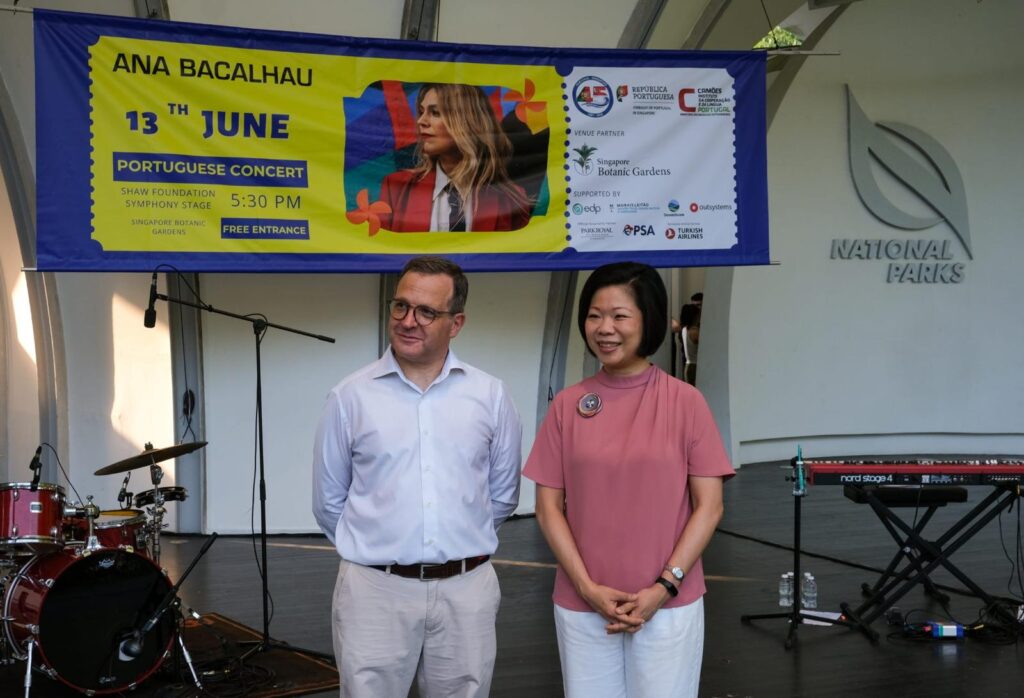
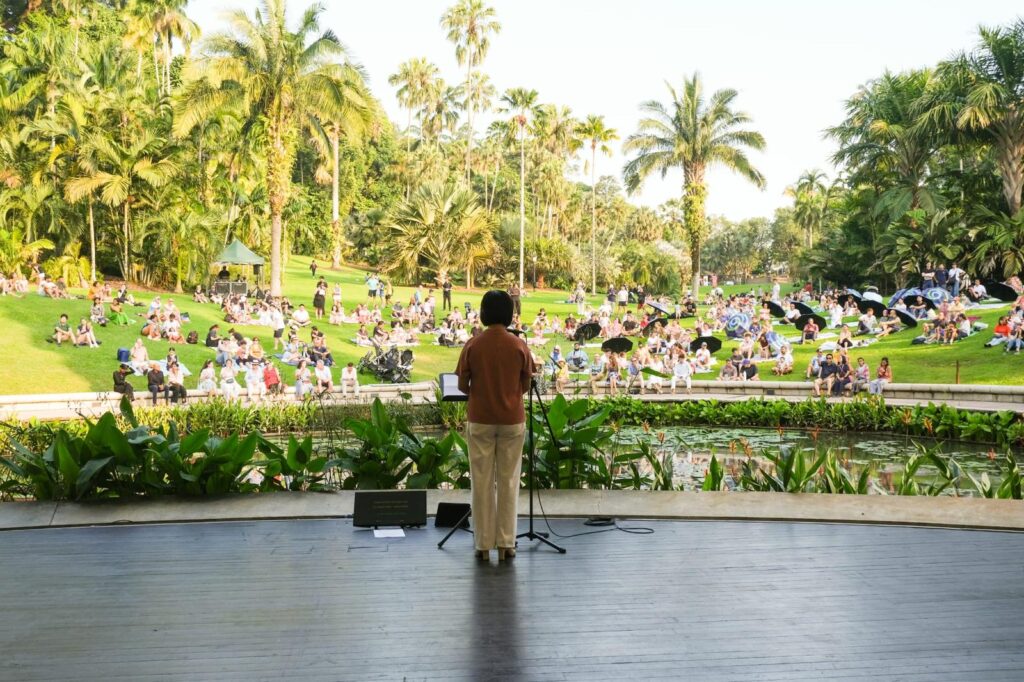
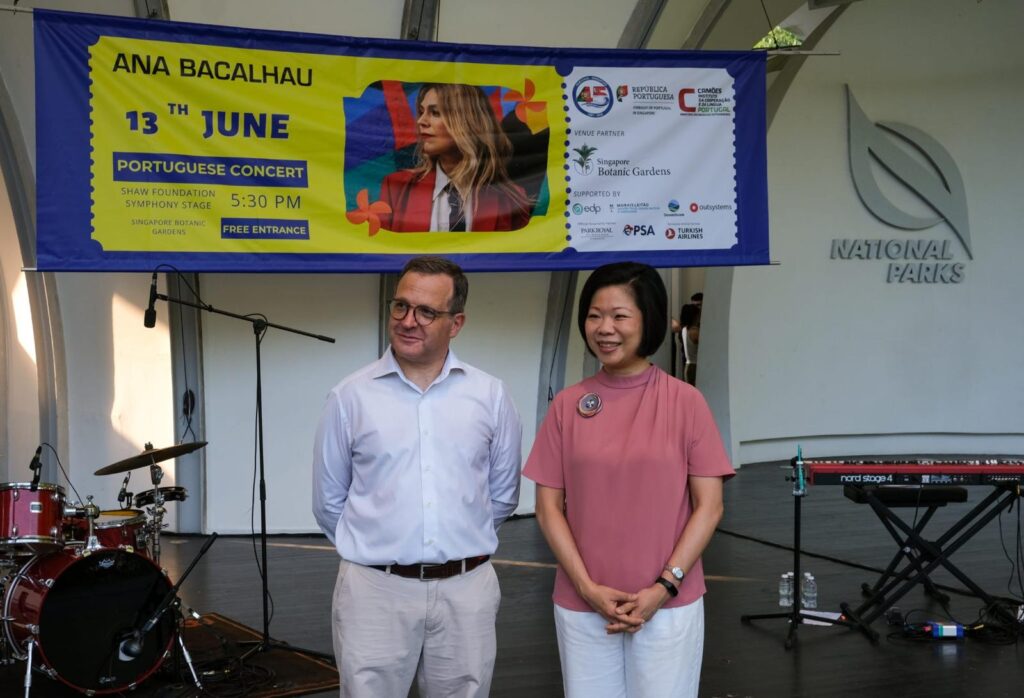
Two guests of honour had the opportunity to deliver opening addresses before the music began.
His Excellency Carlos Pires, Ambassador of Portugal to Singapore, extended his thanks to the entire organising team behind the concert. He then welcomed the opportunity to summarise the surprisingly long history shared by Singapore and Portugal.
HE Pires highlighted that connections between the two nations are entering their fifth century of encounters and exchanges. This can be seen across Singapore in its cuisine, architecture, ideas, and even surnames, which HE Pires noted are a “living testament to this heritage in Singapore’s communities.”
HE Pires also reminded the audience that José d’Almeida, who served as the Portuguese Consul to Singapore two hundred years ago, pursued his interest in botany alongside local communities and laid the foundations for the very venue hosting the concert today: the Singapore Botanic Gardens.
HE Pires observed that the Botanic Gardens felt “open, welcoming and full of the spirit of the city.”
HE Pires also noted that bilateral relations continue to strengthen. Nanyang Technological University has recently launched Singapore’s first higher education Portuguese language course to promote greater interest and commercial exchange between the two nations.
Finally, HE Pires highlighted that the concert felt all the sweeter for being held on St Anthony’s Day, the feast day of Lisbon’s patron saint.
Commercial Exchange and Lusophone Markets
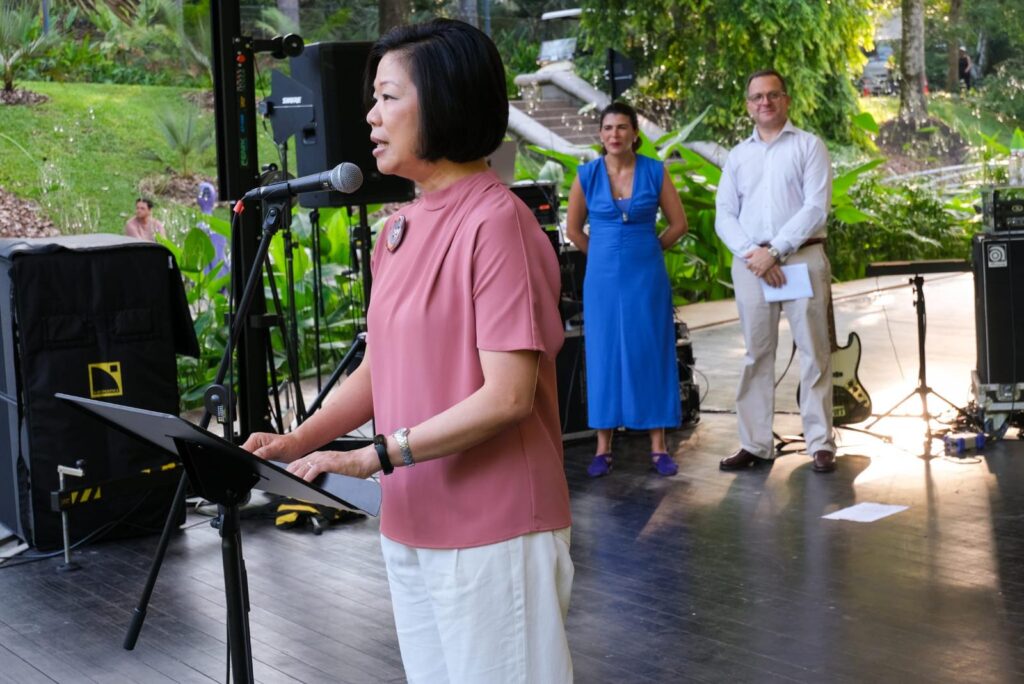
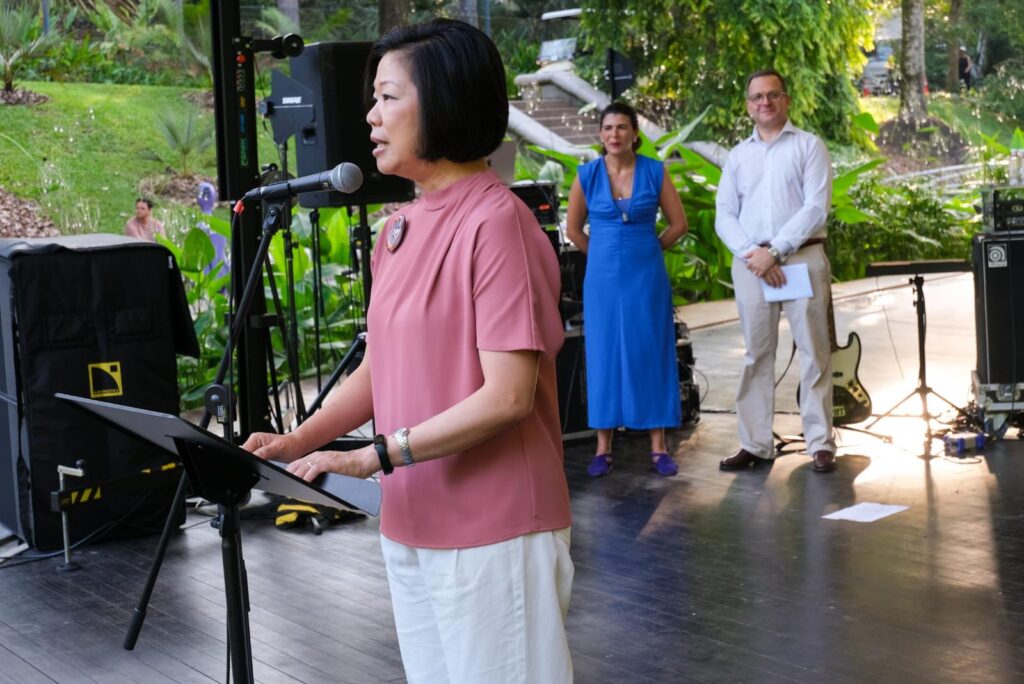
Ms Sim Ann, Senior Minister of State for Home Affairs, delivered a short address after HE Pires to share Singapore’s perspective on the 45th anniversary of bilateral relations.
Ms Sim highlighted the importance of the bilateral relationship, noting that Singapore provides access to regional Asian markets, while Portugal serves as a gateway to Lusophone markets. She credited the warmth of the relationship to centuries of maritime exchange, which demonstrated the possibilities of international cooperation between the two nations.
Ms Sim also noted that the sponsors of the concert have committed to investing in either Singapore or Portugal. Some of these sponsors included local businesses such as Aurevia, which manned booths nearby to showcase their products.
Ms Bacalhau Explains Her Set
Ana Bacalhau made a name for herself as the lead singer of Deolinda, a Portuguese folk band renowned for its interpretation of Fado music.
Fado is recognised as a UNESCO Intangible Cultural Heritage tradition. The genre traces its roots to Ms Bacalhau’s home city of Lisbon. While she noted that Fado has a reputation for melancholy, she emphasised that her music also incorporates another important yet often overlooked element: “party.”
“I am the big part of Portugal that likes to party, so let’s party”.
With that, Ms Bacalhau and her band from Lisbon began the concert.
After the Festivities
After a set featuring some of Ms Bacalhau’s most recent and popular hits, photographs were taken and the festivities concluded just as the sun began to set.
Diplomatic Network (Asia)’s Euan Toh Yu-Yuan reached out to HE Pires and Ms Bacalhau with several questions. Both kindly spared a few minutes of their valuable time to answer our questions on bilateral cooperation, culture, and inspiration.
Q&A with Portuguese Ambassador HE Carlos Pires
Q: Portugal Day was observed a few days ago. How did the Portuguese community here in Singapore celebrate this occasion?
The Day of Portugal, Camões and the Portuguese Communities is particularly significant for Portuguese citizens living abroad, providing a unique opportunity to celebrate our culture, language and identity together.
This year’s celebration, organised in close cooperation with the Portuguese Association of Singapore (APS), was especially meaningful and symbolic as it coincided with the commemorative programme marking the 45th anniversary of the establishment of diplomatic relations between Portugal and Singapore. The highlight of the festivities was a public concert by the acclaimed Portuguese artist Ana Bacalhau, held at the iconic Shaw Foundation Symphony Stage in the Singapore Botanic Gardens.
The event, graced by the presence of the Senior Minister of State for Foreign Affairs, Ms Sim Ann, brought together members of the Portuguese community, Singaporean friends of Portugal, representatives of the diplomatic corps, and the wider public. It provided a valuable opportunity to showcase the vitality of contemporary Portuguese culture while reaffirming the strength of friendship between our two countries.
Q: Looking back in history, when Portugal first established diplomatic relations with Singapore in 1981, what was the rationale behind this decision and what benefits has this relationship brought both countries?
Retrospectively, when Portugal formally established diplomatic relations with Singapore in 1981, this decision represented the official recognition of a connection that transcended the moment of its formalisation. The rationale lay indeed in acknowledging ties rooted in a shared history stretching back more than five centuries, encompassing deep cultural, commercial and people-to-people links that had already enriched both societies.
Portugal was among the first European nations to establish connections with Southeast Asia, through enduring cultural, linguistic and people-to-people exchanges across the region. A particularly significant historical figure stands out in our shared history with Singapore: Dr. José d’Almeida, a Portuguese merchant, physician, philanthropist, botanist and the first Portuguese Consul General to the Straits who arrived here in 1825 and contributed meaningfully to the development of the young settlement. This historical presence underscores the close and longstanding relationship between our peoples long before its formal diplomatic recognition.
Over the past 45 years, our political and diplomatic relations have grown stronger and deeper, namely our common approach on Foreign Policy, deeply rooted in our shared vision of a Rules-Based International Order and International Law, promoting multilateral cooperation.
Bilateral ties have evolved substantially, now encompassing diverse domains including trade, renewable energy, maritime transport, innovation and technology, education, culture and sports. The relationship has been further strengthened through expanding exchanges between our universities, businesses and research institutions, creating multiple channels for cooperation and mutual benefit.
A recent and particularly symbolic development has been the launch of a Portuguese language course at Nanyang Technological University, reflecting growing interest in Portugal and the Portuguese-speaking world within Singapore’s academic landscape. Another very meaningful example of our vivid cooperation in the areas of education, science and technology, and their interaction with industry, is the 2nd edition of the Singapore – Portugal Research and Innovation Week, which took place at NTU, from 22 to 26 June 2026, at the initiative of Professor Paulo Bártolo, Director of the Singapore Centre for 3D Printing, in cooperation with the Embassy and the Portuguese Agency for Trade and Investment (AICEP). This initiative is an opportunity to bring together Singaporean and Portuguese public institutions, universities, research centres and companies with the aim of encouraging more exchanges and common projects, namely in additive manufacturing.
Such enduring vitality of our bilateral bonds will feature prominently in the upcoming exhibition “Portugal–Singapore: 45 Years of Diplomatic Relations, Five Centuries of Shared History” at the National Library.
Grounded in mutual respect and shared heritage, our vibrant partnership fosters a closer cooperation between our two countries and citizens.
Q: In 2024, the Singapore–Portugal Innovation Alliance (SPIA) was launched. Now that two years have passed, what has been the biggest success story of the SPIA, and what can we hope to see in the next few years?
Rather than emphasising a single success, what stands out is the creation of a genuine bridge between the Portuguese and Singaporean innovation ecosystems and incubators of new projects, based on talent and creativity. Through SPIA, startups, researchers, investors and technology companies from both countries can now identify concrete opportunities for collaboration and market expansion.
We therefore commend the outstanding work of the President of SPIA, Ms Jacinthe Tay, and her team. We look to the future of SPIA with optimism and confidence in its potential to generate tangible benefits for researchers, entrepreneurs and businesses from both countries, thereby contributing to the deepening of our bilateral partnership in strategically important, high-value domains.
Q&A with Ms Ana Bacalhau
Q: Is this your first time visiting Singapore? How do you find it so far and how does it compare to the other places you have performed on tour?
Yes, it was my first time in Singapore and I loved it! All the different cultures just happily living together is very inspiring. The audience was very welcoming and supportive. It was a delight playing in Singapore.
Q: How did you decide on the setlist you are performing for a concert that carries diplomatic weight, given that your performance will commemorate the strong relationship between Portugal and Singapore?
I try to choose the songs in my repertoire which better represent my country’s music and traditions and I also explain them a little bit on the show for those who are not familiar with them
Q: For many non-Portuguese speakers, your music still carries an emotional weight when we witness it being performed. What is it about music that allows people across cultures to share a special emotional experience?
I think that it is a universal language. If the performer does any justice to the lyrics and melody, then you really do not need to know the language in which it is being sung for you to understand it. It’s almost magical.
Q: As for your new album Mundo Antena, one of its most popular tracks is Imperial é Fino, where your lyrics carry social commentary as well as clever wordplay and bouncy musical contour. For listeners not from Portugal, how would you explain the unique regional differences of Portugal and what is your perspective of these differences?
I studied linguistics in College, so I really love these regional differences. Idiomatic expressions tell you a lot about a region, the accent too, and Portugal being a relatively small country has nonetheless a very rich and varied culture, accents and regional expressions. This song encapsulates this in a very fun way and audiences really love it.
Q: Singapore is also full of cultural differences in our musical heritage. Have you picked up any new inspirations that may one day add to your musical style?
I’m learning about Singaporean traditional songs and music, which bear the same rich influences the Culture has. I think it is of the utmost importance to let different sounds and influences permeate your music, and I’m absolutely open to it.
Gallery