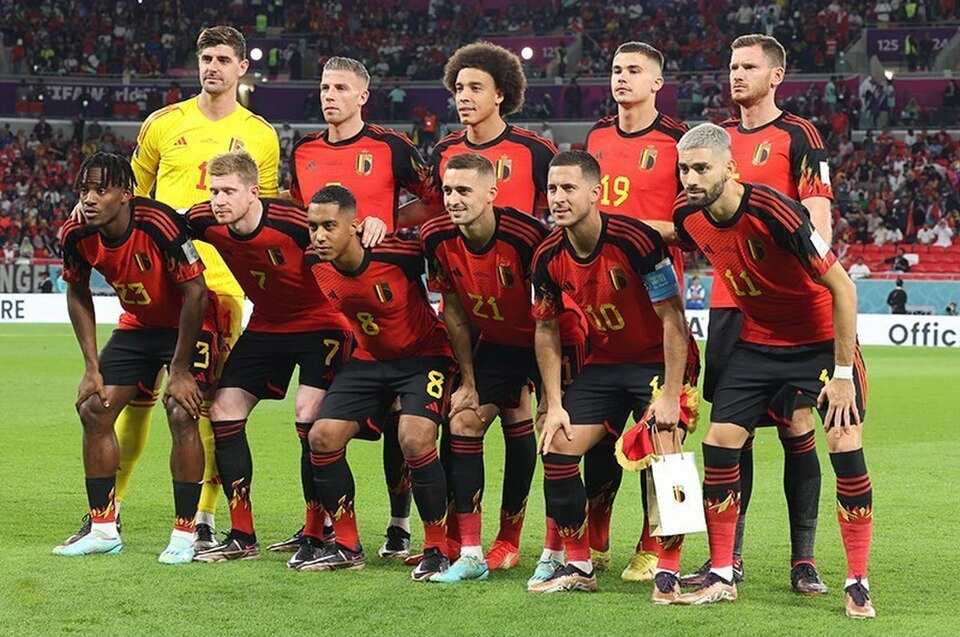
Twenty years ago, when one thought of Belgium’s national icons, the images most likely to come to mind were medieval buildings and artwork, accompanied by fries, chocolate, and a Tintin or Smurf comic.
Nowadays, one might as well add the Belgian national football team to that list. The team is currently in the midst of its fourth consecutive World Cup campaign, with its next match scheduled against Iran on Monday, 22 June at 0300 hrs SGT.
Belgium’s Recent World Cup History
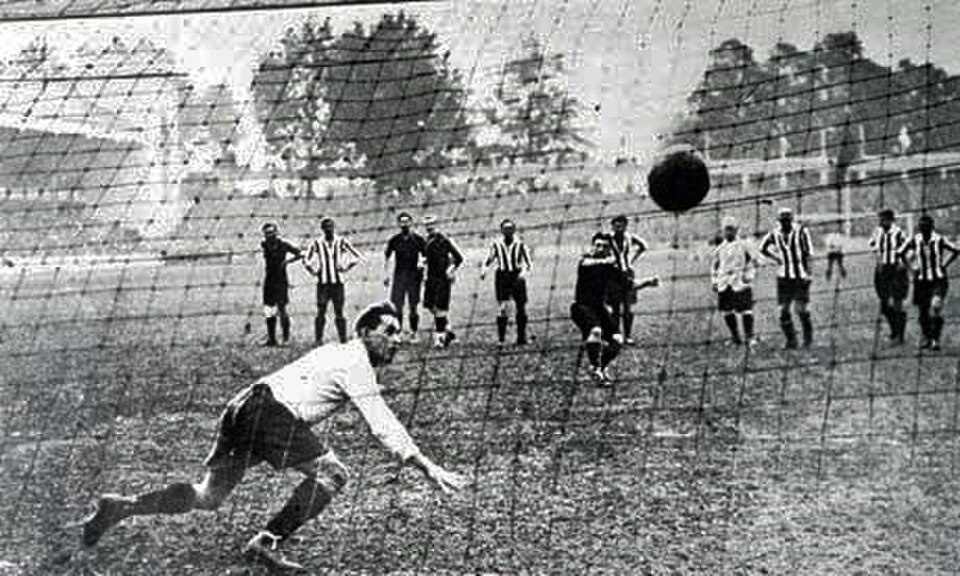
Founded in 1895, Belgium’s national football team has a long history of international competition, including a gold medal victory at the 1920 Olympic Games.
In a 1906 match against their heavily favoured regional rivals, the Netherlands, Belgium recorded an impressive 5-0 upset victory. Having debuted new red football jerseys, the Belgian press dubbed them the “Red Devils”, permanently cementing the nickname.
Despite this storied history, Belgium has not won a major international tournament in more than a century.
However, the current incarnation of the national team has received particular praise as a “Second Golden Generation”. It was this squad that led Belgium to its best-ever World Cup finish in 2018, when the team placed third.
This “Second Golden Generation” includes some of the most recognisable players in club football and features the national team’s two leading all-time goalscorers, Romelu Lukaku and Kevin De Bruyne, both of whom will lead the team at this year’s World Cup.
Three Questions with Belgium’s Ambassador
It is not often that Belgians have the opportunity to share their perspective on the role football plays in their culture. Diplomatic Network (Asia) spoke with Her Excellency Severine De Potter, Belgium’s Ambassador to Singapore, and we are pleased to present her responses to our questions on this topic.
Q: For a small European nation, Belgium plays a significant role in many international organisations, with Brussels serving as the headquarters of both NATO and the European Union. Has international football given Belgium unique opportunities to pursue constructive partnerships with your neighbours and larger global powers?
International football has indeed provided Belgium with valuable opportunities to strengthen partnerships, particularly with its European neighbours. A recent and concrete example is the joint bid submitted by Belgium, Germany, and the Netherlands to host the 2027 FIFA Women’s World Cup. This initiative required close coordination between national football associations, public authorities, host cities, and a wide range of stakeholders across the three countries.
The preparation of the bid involved aligning logistical frameworks, infrastructure planning, sustainability objectives, and organisational standards, demonstrating a high level of trust and cooperation. It also highlighted a shared ambition to promote women’s football and to deliver an inclusive and forward-looking tournament.
More broadly, international football is based on a common set of rules and standards that all participating nations agree to respect. This shared framework creates a level playing field and reflects principles that are equally relevant in international relations, such as fairness, mutual respect, and cooperation.
Although the joint bid was ultimately not selected, the process itself proved highly valuable. It further strengthened ties between the participating countries, reinforced institutional collaboration, and showcased how sport can serve as a platform for bringing regions together around common goals. In that sense, the initiative remains a meaningful example of how football can contribute to constructive international partnerships beyond the outcome of a competition.
Q: For a nation with multiple cultural and linguistic identities, football is often seen as a unifying symbol for the entire country. How important and effective is the national football team in fostering a shared sense of pride and patriotism across Belgium?
In Belgium, the national football team plays an important role in shaping and expressing a shared sense of national identity. The country is composed of different linguistic communities, the Dutch-speaking Flanders, French-speaking Wallonia, the bilingual Brussels-Capital Region as well as a German-speaking community. These realities are reflected in many aspects of public life, including political structures and policy organisation.
In this context, the Belgian national football team, known as the Red Devils, stands out as a symbol that brings together citizens across all regions and language groups. It provides a common point of reference that is shared and recognised by all Belgians.
Major international competitions such as the World Cup create moments where this shared national identity becomes particularly visible. Public spaces, homes, and institutions alike come together in support of the Red Devils, generating a sense of collective pride and belonging. These occasions echo Belgium’s national motto, “L’union fait la force” in French and “Eendracht maakt macht” in Dutch, meaning “Unity makes strength.”
In this sense, football goes beyond sport. It contributes to reinforcing a feeling of belonging to a single national community, offering a powerful and positive expression of what unites Belgians.
Q: Belgium has clearly been working hard to win this World Cup, having come close in 2018. For Belgians, what does sporting success look like beyond simply lifting a trophy, and is there a deeper objective the country hopes to achieve through this year’s tournament?
In the broader global environment marked by uncertainty and economic pressures, moments of sporting achievement take on added significance. They foster collective optimism and provide a shared source of pride that resonates widely. More broadly, major sporting events offer an opportunity to create a sense of connection and perspective across societies.
Sport also carries an important social dimension. In Belgium, it plays a key role in promoting inclusion, well-being, and equal opportunities, particularly among younger generations. Major tournaments such as the FIFA World Cup also demonstrate how countries of all sizes, including Belgium, can nurture and showcase world-class talent. This underlines the importance of continuing to invest in sport at all levels and ensuring that it remains accessible to all.
For Belgium, the objective is therefore not only competitive performance, but also to contribute to this shared sense of possibility and unity, while highlighting the broader societal value of sport, both at home and beyond its borders.