Each year, as thousands of lanterns rise above the ancient stones of Borobudur, the world witnesses more than a religious celebration. Vesak at Borobudur brings together heritage, spirituality, and community, attracting pilgrims and visitors from across Indonesia and around the world.
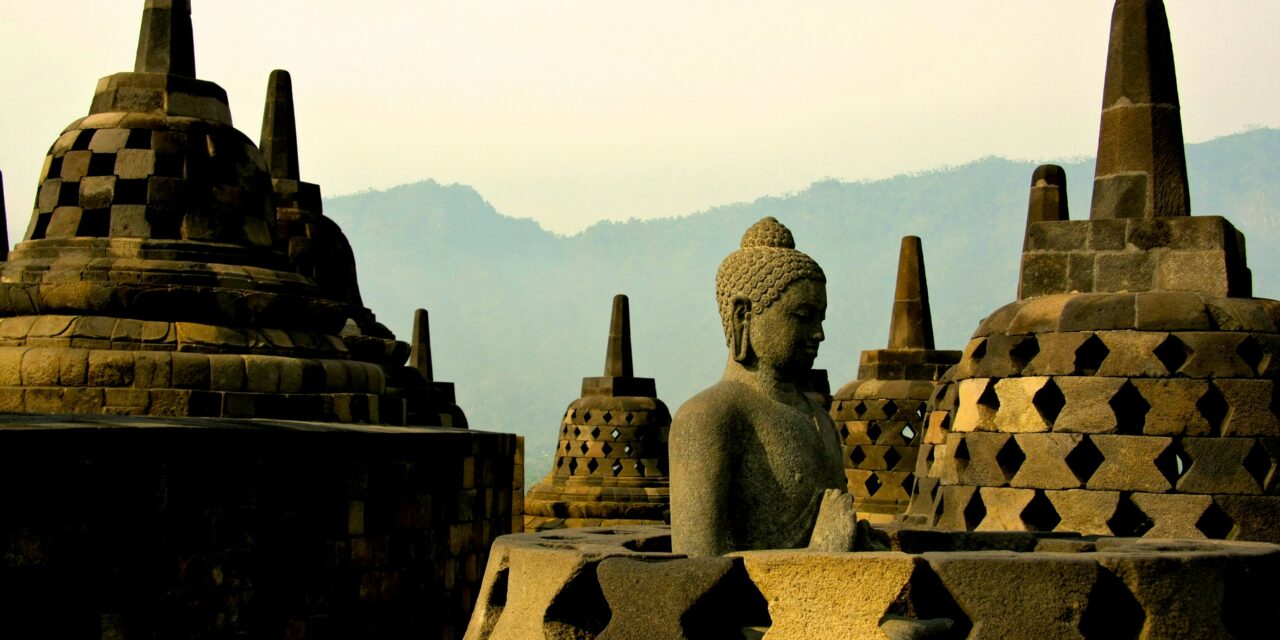
Located in Central Java, Borobudur is the world’s largest Buddhist monument and one of Indonesia’s most recognisable cultural landmarks.
Built during the eighth and ninth centuries, the temple is renowned for its monumental architecture, intricate stone reliefs, and spiritual significance. Recognised as a UNESCO World Heritage Site, it continues to attract pilgrims and visitors from around the world, making Borobudur one of Southeast Asia’s most iconic historic sites.
Vesak at Borobudur
The annual observance of Vesak commemorates the birth, enlightenment, and passing of Siddhartha Gautama. Yet the significance of Vesak extends beyond its religious foundations.
In recent years, the celebration has evolved into a gathering that attracts Buddhist communities, diplomats, international visitors, cultural observers, and media from across the globe, positioning the Buddhist monument of Borobudur as a meeting point between faith, culture, and international engagement.
The journey begins long before the lanterns illuminate the night sky. In the weeks leading up to Vesak, Buddhist monks and devotees undertake pilgrimages that culminate at Borobudur, transforming the celebration into a spiritual journey as well as a religious observance.
In recent years, long-distance walking pilgrimages by monks from Indonesia and across Southeast Asia have become one of the most visible traditions associated with Vesak. The journeys emphasise discipline, simplicity, and mindfulness while also carrying messages of peace and humanity. Along the route, local communities gather to welcome and support the pilgrims, reflecting the spirit of solidarity that surrounds the celebration.
Hundreds of monks and thousands of worshippers eventually converge at Borobudur, making it one of the most important Buddhist gatherings in Southeast Asia. Although the observance is deeply rooted in Buddhist teachings, its appeal extends well beyond the faith itself.
Indonesia’s identity has long been shaped by diversity. Home to hundreds of ethnic groups and religious traditions, the country frequently presents pluralism as one of its defining strengths. Vesak at Borobudur embodies this principle in practice, welcoming participants from different backgrounds, nationalities, and faiths into a shared space for reflection and mutual understanding.
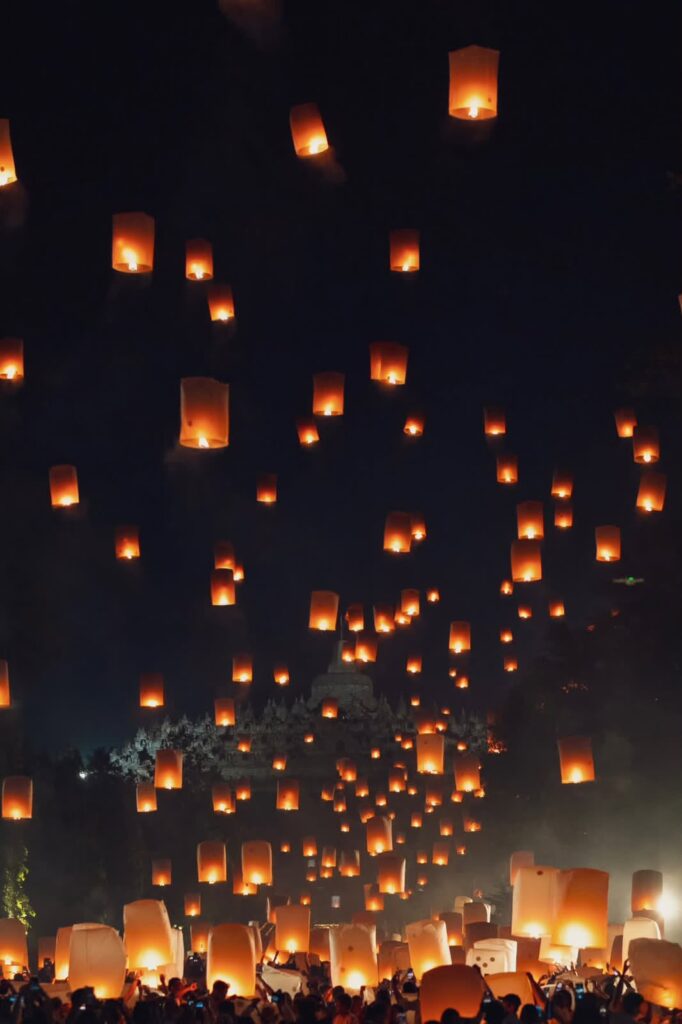
Alongside the pilgrimage processions, the celebrations include prayers, chanting ceremonies, meditation, and communal worship. Thousands of devotees participate in these observances before the festivities climax with the highly anticipated lantern release at Borobudur.
The symbolism of the lantern release captures this spirit particularly well. As thousands of lights ascend into the night sky, they carry prayers for peace, harmony, and human solidarity. For many international visitors, the moment serves as an introduction not only to Buddhist traditions but also to Indonesia’s broader commitment to intercultural dialogue.
What distinguishes Vesak at Borobudur is not merely the scale of the celebration but the message it conveys. In a world increasingly defined by political polarisation, social fragmentation, and geopolitical tensions, the event offers an alternative narrative centred on compassion, mindfulness, and coexistence.
Cultural Diplomacy in Practice
This is where Vesak intersects with diplomacy. Cultural diplomacy is often associated with exhibitions, performances, educational exchanges, and international forums. Yet some of its most effective expressions emerge through lived experiences. By opening its cultural and spiritual heritage to global audiences, Indonesia transforms Borobudur from a historic monument into a platform for engagement, demonstrating how culture, faith, and heritage can foster understanding across borders.
As governments and institutions continue to search for ways to foster trust across borders, events such as Vesak at Borobudur offer the world an important reminder: diplomacy is not always conducted in conference halls or negotiation rooms. Sometimes it takes place along a pilgrimage route, in moments of collective silence, or beneath a sky illuminated by thousands of lanterns carrying a universal aspiration for peace.