
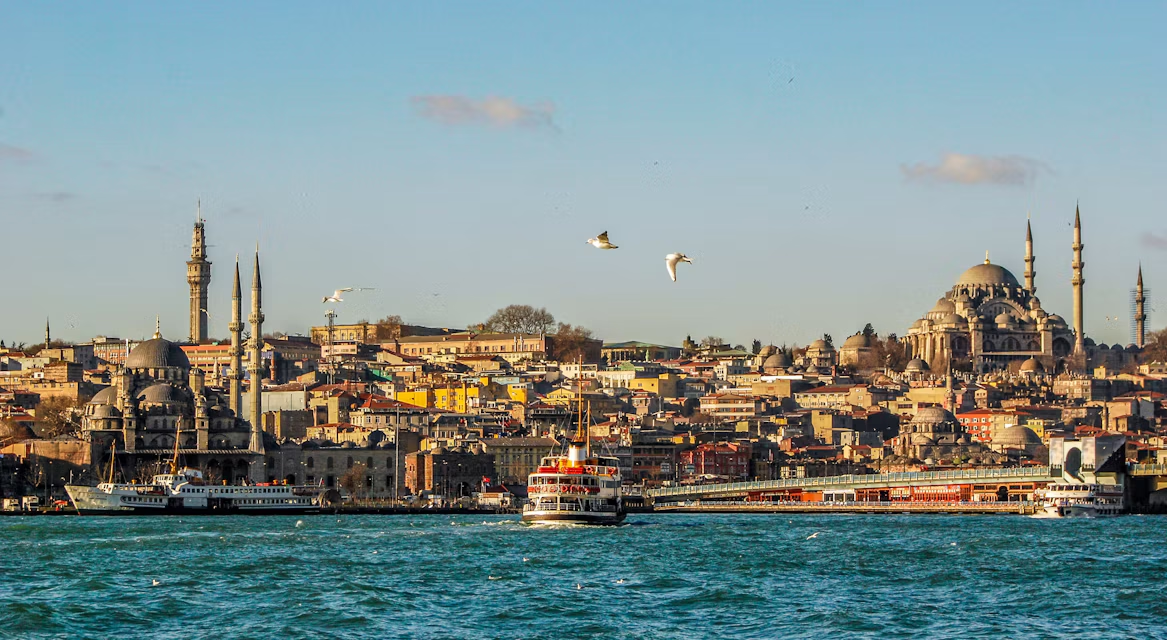
The 31st Conference of the Parties to the United Nations Framework Convention on Climate Change (COP31) opened in Antalya, Türkiye, on 9 November and will continue until 20 November 2026. The annual conference brings together governments, international organisations, businesses, scientists and civil society representatives to negotiate climate policy and assess progress towards global climate commitments.
COP31 is the latest meeting of countries under the UN Framework Convention on Climate Change (UNFCCC), the international treaty established in 1992 that provides the foundation for the Paris Agreement. It is the principal multilateral forum for reviewing national climate commitments, negotiating decisions and advancing international responses to global warming.
Türkiye is hosting the conference, with Turkish Minister of Environment and Urban Planning, Murat Kurum serving as COP31 President. Australia’s Climate Change Minister Chris Bowen serves as President of Negotiations. World leaders, national negotiators and representatives of business, youth organisations, Indigenous communities and civil society are participating in discussions on emissions reduction, climate adaptation and the financing needed to implement climate commitments.
This year’s conference places particular emphasis on implementation. For developing countries, that means securing access to climate finance and technology while strengthening the capacity to respond to increasingly severe climate impacts.
ASEAN Strengthens Its Regional Climate Agenda
Running throughout COP31, the pavilion provides a platform for ASEAN Member States and international partners to discuss regional climate initiatives. Its programme addresses the implementation of the Paris Agreement, with particular attention to energy transition, climate finance, nature-based solutions and the participation of private investment.
ASEAN Secretary-General Dr Kao Kim Hourn said the pavilion would help advance regional cooperation while giving greater visibility to the work of governments, businesses and communities. The programme also highlights the role of women and young people in shaping climate responses.
ASEAN–EU Day on 10 November was among the pavilion’s key events. The occasion highlighted a strategic relationship that began with Dialogue Relations in 1977 and will reach its 50th anniversary in 2027. Germany also continues to support regional climate cooperation through its partnership with the two organisations.
How ASEAN Countries Are Approaching Climate Action
Although ASEAN has a common regional agenda, its members face different economic conditions, emissions profiles and climate vulnerabilities. Their priorities at COP31 reflect those differences.
Indonesia has presented its participation under the theme Indonesia Delivering Climate Solutions at Scale. Its national pavilion, opened on 9 November, features five areas: clean energy transition and green industrialisation; protection of forests, peatlands and mangroves; climate-resilient cities and waste management; climate finance and carbon markets; and climate justice.
The Indonesian delegation, led by Presidential Special Envoy for Climate and Energy Hashim S. Djojohadikusumo, is also using the conference to promote investment and international partnerships. Its Second Nationally Determined Contribution, submitted in October 2025, sets out the country’s emissions pathway towards 2035 and its longer-term net-zero ambition for 2060 or earlier.
Singapore is focusing on climate resilience and practical implementation through its national pavilion, themed Shared Resilience, Strengthened by Community. The pavilion is hosting more than 60 programmes covering adaptation, carbon markets, energy decarbonisation, finance, transport and youth participation. Singapore is also preparing to assume the ASEAN Chairmanship in 2027, with regional adaptation and energy cooperation among the priorities highlighted by its climate negotiators.
Malaysia is bringing attention to the implementation of its climate targets, including its updated emissions pathway and the need for international financing, technology transfer and capacity building. Its participation also reflects the challenge of balancing energy security and economic development with a transition towards lower emissions.
The Philippines is linking its COP31 engagement to its ASEAN Chairmanship and its national climate commitments. Its 2026 NDC sets an emissions reduction and avoidance target of 75 per cent for 2025–2035 against business-as-usual projections. A substantial portion of the target depends on international support, making climate finance an important part of its engagement.
Thailand has set a target to reduce net emissions by 47 per cent from 2019 levels by 2035 and move its net-zero target forward to 2050. The country is also seeking international climate financing to support its transition and implementation of domestic climate policies.
Vietnam is preparing its next Nationally Determined Contribution (NDC 3.0), focusing on stronger climate commitments and the financing and technical support needed for implementation.
Brunei Darussalam is highlighting its commitment to reduce emissions by 20 per cent below business-as-usual levels by 2035, with measures covering industry, transport and waste.
Cambodia is calling for more accessible climate finance at COP31, particularly grant-based funding to support adaptation, vulnerable communities and climate resilience. Its Environment Minister made a similar appeal alongside other least developed countries ahead of the conference.
Lao PDR is preparing an economy-wide NDC 3.0 covering emissions reduction and climate adaptation, with financing and implementation support remaining key priorities.
Timor-Leste, ASEAN’s newest member, is representing least developed countries in its capacity as Chair of the Least Developed Countries (LDC) Group. Its priorities include grant-based climate finance, adaptation support and a just transition.
Myanmar, meanwhile, has not sent a delegation to COP31, according to Carbon Brief’s analysis of delegate numbers, and has yet to submit an updated NDC.
As COP31 moves towards its final days, the challenge for ASEAN will be to turn climate commitments into measurable progress. While member states are pursuing different national priorities, their ability to strengthen regional cooperation, mobilise climate finance and expand access to technology will shape how effectively they respond to the climate crisis. The conference offers an opportunity to move beyond shared ambitions towards coordinated action, ensuring that Southeast Asia’s climate transition is both sustainable and inclusive.