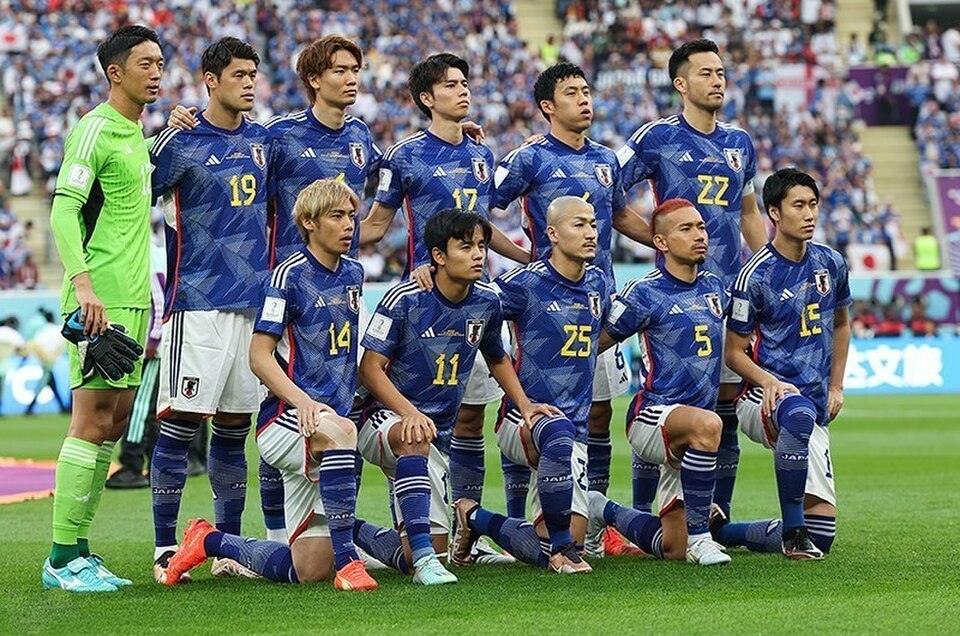
From the slopes of Mount Fuji to the beaches of Okinawa, one of Asia’s footballing powers is gearing up nationwide for its appearance at the 2026 FIFA World Cup.
Japan will return for its eighth consecutive FIFA World Cup, with its first match scheduled for Sunday, 14 June at 2200 hrs SGT against the Netherlands.
Japan’s Recent World Cup History
Long regarded as a dark horse at the World Cup, Japan has frequently punched above its weight, reaching the knockout stages in each of the last two tournaments while recording several notable upsets along the way. In particular, victories over former champions Germany and Spain at the 2022 FIFA World Cup.
Japanese fans have every reason to believe their team will once again exceed expectations. Japan won 13 of its 16 qualification matches, becoming the first team outside the three host nations to qualify for this year’s tournament.
Furthermore, Japan has won its last six international friendlies, including victories over Brazil and England, both former World Cup champions.
Much of this success can be attributed to the country’s footballing talent. Japanese players have increasingly outperformed expectations in foreign domestic football leagues.
Among them is this year’s star player, Takefusa Kubo, who has stepped into a leading role following injuries within Japan’s offensive line-up. At just 25 years old, Kubo has earned the nickname “the Japanese Messi” because of his technical ability and skill in overcoming physically larger opponents.
It can also be argued that Japanese players possess strong mental discipline and positive attitudes that contribute to success on the pitch.
That attitude appears to extend beyond the players themselves. Japanese supporters have earned an international reputation as courteous visitors wherever they travel. It has become a recurring news story to see Japanese fans and players voluntarily organising stadium and dressing-room clean-ups after matches, even in victory.
Three Questions with Japan’s Ambassador

Diplomatic Network (Asia) reached out to Japan’s Ambassador to Singapore, His Excellency Hiroshi Ishikawa, for his thoughts on the football culture surrounding the Japanese national team. We wanted to understand how Japanese success in football has contributed to a nation already famous for sporting excellence.
Q: This will be Japan’s eighth consecutive appearance at the FIFA World Cup, with the national team being the first outside of the three host nations to qualify for this year’s tournament. Has this consistency at the highest levels of football provided a strong platform for Japanese sports diplomacy?
Yes. Along with baseball (do you know Shohei Ohtani?), Japanese football provides a strong platform for Japanese sports diplomacy.
Q: Japanese fans are well known in the sporting community not just as passionate followers of the national team, but also as polite away fans, famous for helping clean up stadiums after matches. Are the people of Japan familiar with this reputation abroad, and what is it about Japanese culture that encourages this sort of respectful behaviour?
I am very proud of Japanese fans’ behaviour. We have traditional sports such as judo, sumo, and kendo that place great importance on courtesy. Even though competitors face each other with full intensity, they are expected to show respect to their opponents once the match has finished. I think this spirit is also alive among Japanese football fans.
Q: Japan draws on a traditional warrior culture through the legacy of the samurai, and the National Football Team themselves are nicknamed サムライ・ブルー (Samurai Blue). What are the benefits of mixing traditional imagery and symbols with modern sport in the 21st century, and how effective is this for cultural diplomacy?
People around the world know the samurai as warriors who fought fiercely against their opponents, while also upholding values such as discipline, spiritual strength, and courtesy. I think that “Samurai Blue” represents the Japanese football team very well.